Segmentation

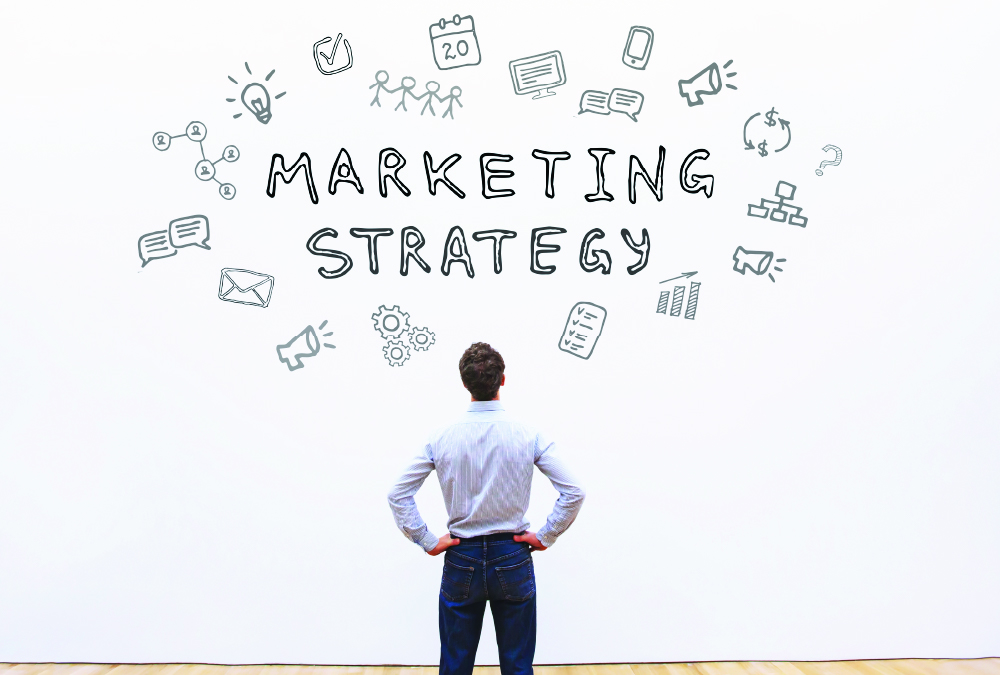
Your existing and potential customers fall into particular groups or segments, characterized by their ‘needs’. Identifying these groups and their needs through market research and market reports, and then addressing those needs more successfully than your competitors, should be one of the key elements of your marketing strategy.

Targeting and positioning

You should aim to sell to the market segments that will be most profitable for your business. It is important that your product offering meets the needs of your chosen target market. See target your most profitable customers and define your target market.

You should create a marketing strategy that makes the most of your strengths and matches them to the needs of the customers you want to target. For example, if a particular group of customers is looking for quality first and foremost, then any marketing activity aimed at them should draw attention to the high quality of your products or service.

Promotional tactics

Once you have created your marketing strategy, you must then decide which marketing activity or activities will ensure your target market know about the products or services you offer, and why they meet their needs.

There are many ways to achieve this – such as various forms of advertising, exhibitions, public relations, digital marketing and an effective ‘point of sale’ strategy. Try to limit your activities to those methods you think will work best with your target market, to avoid spreading your budget too thinly.

Monitoring and evaluation

Monitoring and evaluating how effective your strategy has been is a key element, yet often overlooked. This control element not only helps you see how your strategy is performing in practice, it can also help inform your future marketing strategy.

A simple approach is to ask each new customer how they heard about your business. Deeper analysis can come from questionnaires, focus groups, and examining customers’ online behavior.

Marketing plan

Once you have decided on your marketing strategy, draw up a marketing plan that sets out how you intend to execute that strategy and evaluate its success. The plan should be constantly reviewed and, if necessary, updated so you can respond quickly to changes in customer needs and attitudes in your industry and in the broader economic climate. Read more about how to write a marketing plan.

Once you have decided to use telemarketing and have determined your target audience, you need to decide how you will approach your strategy.

Contacting customers directly can be an efficient sales device. This is especially true if you intend to tell existing customers about a new product, or one that is similar to something they have previously purchased from you.

However, before you begin telemarketing, you need to do the following:

  • obtain your clean, opted-out list of current customers and their details
  • decide if you will do your telemarketing in-house or get an agency to do the work for you
  • think about rewarding your existing customers with special offers

Using a telemarketing agency

You should try to ensure that your telemarketing generates new leads, retains your existing customers, and maintains relationships. If your business is struggling to do these things through its telemarketing project, consider hiring a telemarketing service provider.

Before instructing a service provider you should:

  • Decide on the services you need. For example, do you just need cold calling, or would you require someone to be contactable at all times?
  • Ask for referrals and research into any bidding service providers. Many telemarketing agencies advertise their services but you can also find information about them online.
  • Contact the telemarketing service provider directly and gauge their responses to your particular needs.
  • Request a proposal – this will help you shortlist the agencies you are considering.
  • Visit the agency to observe the office environment and see if the company appears credible.

Planning other telemarketing activities

You can also use inbound calls to sell products or services to your customers. For example, if a customer asks for a particular item that you stock, you can offer to supply them with relevant, accompanying products that they may need. If you intend to use this sales tactic, you should ensure that any telemarketing staff has had previous sales training.

Telemarketing is a form of direct marketing. It involves talking to potential or existing customers on the telephone.

Telemarketing can help you to promote your products or services, build your customer database, generate leads and appointments, stay in touch with existing customers or generate new ones.

Planning your telemarketing
When planning your telemarketing campaign, you should:

  • Decide if you want to outsource. You’ll need to choose whether you will carry out the telemarketing in-house or use the services of a specialised marketing company. See outsourcing.
  • Make sure you know who your target audience is. You need to know what your product or service is, who it is aimed at, and who is most likely to purchase it. See define your target market.
  • Make sure your marketing lists are reliable and up to date. This will allow you to focus on your target audience, ensure your lists comply with the Privacy and Electronic Communications Regulations 2003 (PECR). You must not include people or organisations that have opted out of receiving unsolicited sales and marketing calls.
  • Anyone you contact must have consented to receive that type of communication from you. Read more about privacy and data protection in direct marketing.
    Identify key personnel at target businesses. Speaking to the right person will increase your chances of making a sale.
  • Consider how you will pay your telesales staff. You could, for example, provide sales incentives. See the right pay package for your salespeople.
  • Have a script in place. Having a simple, professional, and pre-prepared script allows you to sell and respond to queries more effectively. Make sure you explain who you are and what your business does.
  • Think about the relative costs. It may be more cost-effective to use an outside marketing business. The initial costs may be outweighed by increased sales.

Automated telemarketing
Automated telemarketing uses interactive voice response (IVR) to effectively process high numbers of telemarketing calls in an inexpensive way.

Outbound IVR telemarketing can be used to generate leads and sales and alert customers to new offers, product or service changes and product recalls. It can also be used to conduct meetings, conference calls or business surveys. You can only make automated marketing calls to people who have specifically consented to it.

Inbound IVR can be used to offer helpdesk services, handle incoming calls or to provide disaster backup in case of emergency.

Since IVR campaigns do not require actual telemarketers, they are often less expensive than traditional telemarketing campaigns. The results are also easy to measure, flexible and can show immediate results. On the other hand, consumers may perceive IVR as less personal and more intrusive.

All automated calls must include your name and a contact address or freephone number. You must also allow your number (or an alternative contact number) to be displayed to the person receiving the call.

Strategies to increase sales revenue
Your sales revenue can be a key profit driver in your business. To increase your profitability, you should develop a strategy to grow your sales. You can look at things like:

  • increasing your prices
  • finding new customers
  • selling more to existing customers
  • offering sale promotions to boost the volume of sales
  • developing new product or service lines
  • selling in new markets

You should examine the products and services you offer, your target market and your pricing strategy to see if you can make improvements.

Review your product or service pricing
It’s a good idea to review your prices often. Changes in your marketplace could mean that you can increase prices without losing sales. However, you should test any price rises before you make them permanent. See how to price your product or service.

Use the Pareto principle to target the right customers
It’s not just your prices that affect your profits – the type of customers you’re selling to can have a big impact. You may be able to increase your profit margins by targeting your most profitable customers, even if you lose the less profitable ones. To find out the most profitable customers, you can apply the Pareto principle.

Often known as the 80/20 rule, the Pareto principle proposes that around 80 per cent of your profit is gained from 20 per cent of your products or services. Similarly, 80 per cent of profit is often also gained from 20 per cent of customers.

Review your product and service offering
If you offer a range of products and services, examine the profit margins of each. You can work out what individual products cost by you using activity-based costing.

When you look at your current offering, you may find that some products do not deliver good returns. Consider concentrating your efforts on your more profitable offerings.

Carry out regular market research to identify products and services that are in demand. Keep up to date with market trends, as this will help you to identify new opportunities to generate profits.

Generating sales leads
One of the hallmarks of a successful business is being continually on the lookout for new business. Generating leads in a proactive way will increase selling opportunities and help to keep your order book full.

Mapping your territory
Before you start sourcing leads, decide where you are going to base your search, and in which industries. If your product or service could be widely used, start locally and target particular geographical areas. If you have a niche product or service, focus on specific companies.

How to source new sales leads
There are many ways to find new leads, such as:

  • initiated leads – from prospects who fill out a website form, visit your stand at a trade show, or respond to an advertisement or mailshot
  • profile fitting – using market research tools to identify potential customers who are likely to be a match for your company’s products
    market monitoring – monitoring media outlets, such as news articles, internet forums and corporate press releases
  • canvassing – cold-calling in-person, by telephone or by email
  • data mining – looking for possible leads in information (for example, a corporate database) that your company has previously gathered
  • personal and professional contacts – asking for or incentivising referrals from existing customers, suppliers or acquaintances and through networking
  • promotions – using free gifts to encourage potential leads to provide contact information or attend a sales meeting

Qualifying sales leads
Deciding whether a sales lead has the potential is known as qualifying. There are many reasons why some leads may not be successful, including:

difficulties in meeting the needs of some prospects – their needs may be too great, or expensive
needs already being satisfied – prospects may have already purchased a similar product
lack of finance – someone may need a product but be unable to afford it
prospects lacking authority to approve the purchase
Using databases to keep track of leads
Storing information on a database allows you to keep track of who you have already contacted and spot patterns where you have been successful. See benefits of databases.

You can also buy a database of business leads from a variety of suppliers. These can be expensive, and you may need to employ staff to help manage them, depending on the size of the list.

Your existing customers are important assets to your business. They have already chosen you instead of your competitors. Keeping their custom costs far less than attracting new business. It’s worth taking steps to make sure that they’re satisfied with the service they receive.

You can use techniques such as:

  • providing a free customer helpline
  • answering frequently asked questions on your website
  • following up sales with a courtesy call
  • providing free products that will help customers look after or make the most of their purchases
  • sending reminders when services or check-ups are due
  • offering preferential discounts to existing customers on further purchases

Existing customer relationships are opportunities to increase sales. Your customers will already have a degree of trust in your recommendations.

Sell more existing customers

Cross-selling and up-selling are ways of increasing either the range or the value of what you sell. They work by pointing out new purchase options tocustomers. Alerting customers when new, upgraded or relevant products become available is one way of increasing sales. You could do this through regular emails or newsletters.

To keep your customers’ trust, never try to sell them something that doesn’t meet their needs. Remember, your aim is to build a solid long-term relationship with your customers rather than to make quick one-off profits.

Satisfied customers will contribute to your business for years, through:

  • purchases
  • recommendations
  • referrals

Before looking at new markets, think about how you can get the most out of your existing customers – it’s usually more economical and quicker than finding new customers.

Perhaps you could sell more to your existing customers, or look at better ways to retain key customers.

Focus on the market

Take steps to find your most profitable customers:

  • Analyse the different needs of different groups of customers.
  • Focus on a market niche where you can be the best.
  • Aim to put most of your efforts into the 20 per cent of customers who provide 80 per cent of profits.

Don’t forget the follow-up
Monitoring, evaluation and review are key to success:

  • Approach a third party for feedback about your strategy – they may be able to spot any gaps or weaknesses that you can’t see.
  • Put your marketing strategy into effect with a marketing plan that sets out the aims, actions, dates, costs, resources and effective selling programmes.
  • Measure the effectiveness of what you do and be prepared to change things that aren’t working.

Pitfalls to avoid

Watch out for these common mistakes:

  • Making assumptions about what customers want.
  • Ignoring the competition.
  • Trying to compete on price alone.
  • Relying on too few customers.
  • Trying to grow too quickly.
  • Becoming complacent about what you offer and failing to innovate.

Be sure to follow up all of your marketing and promotional strategies with a marketing plan. This sets out clear objectives and lists the actions you will take to achieve them.

Direct marketing allows you to generate a specific response from targeted groups of customers. It’s a particularly useful tool for small businesses because it allows you to:

  • focus limited resources where they are most likely to produce results
  • measure the success of campaigns accurately by analysing responses
  • test your marketing – you can target a representative sample of your target audience and see what delivers the best response rates before developing a full campaign

A direct marketing campaign can help you to achieve the following key objectives:

  • increasing sales to existing customers
  • building customer loyalty
  • re-establishing lapsed customer relationships
  • generating new business

There are many different approaches to direct marketing. These include mailshots and telemarketing, email marketing, SMS marketing and social media. The method most appropriate for your business will depend on who you are targeting, the message you want get across and response you want to generate.

The results of direct marketing aren’t guaranteed. A poorly planned or targeted campaign can be a waste of money. A badly designed mailshot, for example, could simply end up in the bin. And worse still, it may irritate recipients and damage your business’ reputation as a result.

It may not be popular but outbound telemarketing is one of the most effective strategies for growing a business. The good news is that this doesn’t have to be hard, and it doesn’t have to involve bullying potential clients into submission, either. Building an effective telemarketing strategy for business growth is all about learning to tap into the value that you bring your clients and potential clients.

Have a Plan

Before you begin telemarketing, make certain that you know what your objective is for the exercise. If it’s collecting e-mail addresses, you may well—for smaller and medium-sized companies—be able to obtain these from the first point of contact (whoever answers the phone). If it’s to talk to a decision maker, you’re going to need a way of convincing the first point of contact (and possibly the second if they have a secretary or Personal Assistant, PA) to put you through.

Have a Script

Once you have your objective in mind, you can create a small script or scripts that will help you achieve your objective. For example, if you want a few specific e-mail addresses—the script might be:

“Hi, my name’s Sally. I’m calling from logo design company XYZ. I’d like to send your marketing manager an introductory e-mail about our services. Could you tell me the name and e-mail address please?”

Your script is your guide to how you will conduct the first part of your call. It doesn’t have to be followed perfectly, and you will find that you’ll naturally vary the wording slightly from call to call – it’s just there to remind you of what you want to say, in case you get stuck.

Speak Slowly and Clearly

It’s normal to be a little nervous when you first start cold calling; unfortunately, that nervousness can often cause you to blurt out your script rather than relay it in a way the person on the other end of the line can understand.

Dropping your arms to your sides when you get through can create pressure on the diaphragm and help you slow down. With a more natural speed, you’ll sound more sincere. Sincerity works well in conducting business. And it feels good, too.

Be Prepared to Have a Conversation

The person on the other end may have questions for you. You should be prepared to talk through any issues or concerns they have. If telemarketing were simply a “make a call, get an answer, hang up” proposition, it would be a much faster form of marketing than it actually is, and we wouldn’t need to write much more about it here.

Be Prepared to be Told “No” or “No, Thank you”

Truthfully, sometimes the response will be even ruder. Don’t let it upset you. If you feel confident, you can try—politely—to argue your case, but sometimes a “no” really is a “no”. Imagine the shoe on the other foot, too—you don’t say “yes” all the time, do you? Let it go, thank the person for taking the time and try again another day. Telemarketing requires a lot of persistence to produce good results.

Always End a Call Politely

Whether you get what you wanted or not, always thank the person on the other end for his or her time. It may take many calls to get what you want, and you’ll be remembered, and not in the way you want to be, if you’re not polite. You’re only as good as your last call, and first impressions last. Of course—it almost goes without saying—you should be polite throughout the entire call, too.

Always Take Action on Your Calls

If you say you’re going to send some marketing material – send it. Ideally, send it right there and then. Never leave it longer than the end of the working day—the sundown rule. If you waste somebody’s time or leave them dangling, waiting for undelivered promises, they won’t be likely to buy your services in the future. And they can tell others about you.

Practice Makes Perfect

It can take a little while to get comfortable with telemarketing; don’t give up if the first call isn’t perfect. Remember that the worst thing that can happen is that someone will say “no”, which leaves you no worse off than you were before you made the call.

Obey the Law

Most countries have no laws governing telemarketing to businesses. However, before you start telemarketing, check with your legal representative to ensure that’s the case where you live.

You need to be particularly careful if your clients are small home-based businesses; telemarketing to consumers (which is how this could be interpreted) is governed by strict rules in many parts of the world. Ignoring this can burn a telemarketer—there may be legal repercussions, i.e., fines, etc. Always get legal advice on this subject before moving forward with your telemarketing efforts.

Telemarketing can have immense impact on any business. It is that area of marketing which provides access to the widest market without having to spend a fortune. Telemarketing services can be started as an internal process of the company or they can be outsourced to the numerous telemarketing companies that are available

There are many pros and cons to hiring telemarketing services to boost your business’ sales. Not many business owners have large amounts of time to sit on the phone and start dialing up prospective leads. This is where telemarketing services come in. Telemarketing services have employees who will literally spend hours on the phone for you, drumming up leads or attempting to sell the service that your company provides.

If you already generate enough leads but need someone to handle a large amount of inbound calls, telemarketing services can help in this arena as well. We’ve all seen those late night infomercials that hawk everything from rug shampoos to diet pills. The number that you dial to order the product is usually not directed to that particular company itself but rather a call center service that handles inbound calls. Depending on how many calls you anticipate coming in, the fees charged by these telemarketing services may be well worth the expenditure. These particular telemarketers work out of what is typically known as a call center and may work for multiple companies at one time.

There are also outbound telemarketing services that will call people who may have an interest in your product or service. Many work off of telemarketing lists of potential clients that you may have to provide. Since hiring a telemarketing service allows potentially hundreds of calls to be made a day, even if only a small fraction of these prospects become actual clients, you may still see a substantial increase in the amount of sales profits that your company makes.

There are also negative aspects of hiring telemarketing services that you should consider. Not too many people enjoy getting telemarketing calls, particularly at dinner time or after a hard day at work. Many people just want to come home and relax or they have their after work chores to handle like getting dinner ready, checking their kid’s homework, etc. The last thing they may want is to pick up a ringing phone only to have a telemarketing service try to sell them something. There are services now available that allow calls to be prescreened to prevent telemarketing services from being able to complete the call. Many people have also placed their name on the national, “do not call” list. This is another hindrance to telemarketing services trying to do their jobs.

The internet has also contributed to the decline of successful telemarketing services. Instead of having to pay what could be exorbitant fees to telemarketers, many businesses have created websites and employ search engine optimization techniques to help them generate leads. This can be a cost effective way to boost sales because the website hosting fees can be much less than the fees required to pay a telemarketing service.