In today’s highly competitive business environment, companies are constantly looking for smarter ways to scale operations, improve customer engagement, and increase efficiency without significantly increasing operational costs.

One of the most effective growth strategies modern businesses are adopting is outsourcing customer communication and telecalling operations.

From startups and SMEs to large enterprises, businesses across industries are using outsourced communication teams, telecalling services, and contact center solutions to improve customer interaction, lead generation, customer support, and operational scalability.

Professional communication partners like Reliable Communication help businesses manage customer engagement more efficiently through structured telecalling, customer support, and communication management services.

Why Customer Communication Is Important for Business Growth

Customer communication directly impacts:

  • Customer satisfaction
  • Lead conversion
  • Customer retention
  • Brand reputation
  • Sales performance
  • Customer trust

Businesses that maintain strong communication systems are able to build better customer relationships and scale more efficiently.

As businesses grow, handling customer inquiries, follow-ups, support requests, and engagement internally becomes increasingly difficult.

This is where outsourced communication teams become highly valuable.

What Are Outsourced Communication Teams?

Outsourced communication teams are professional service providers that manage customer interaction and communication processes on behalf of businesses.

These teams may handle:

  • Outbound calling services
  • Inbound customer support
  • Lead generation
  • Customer follow-up
  • Appointment scheduling
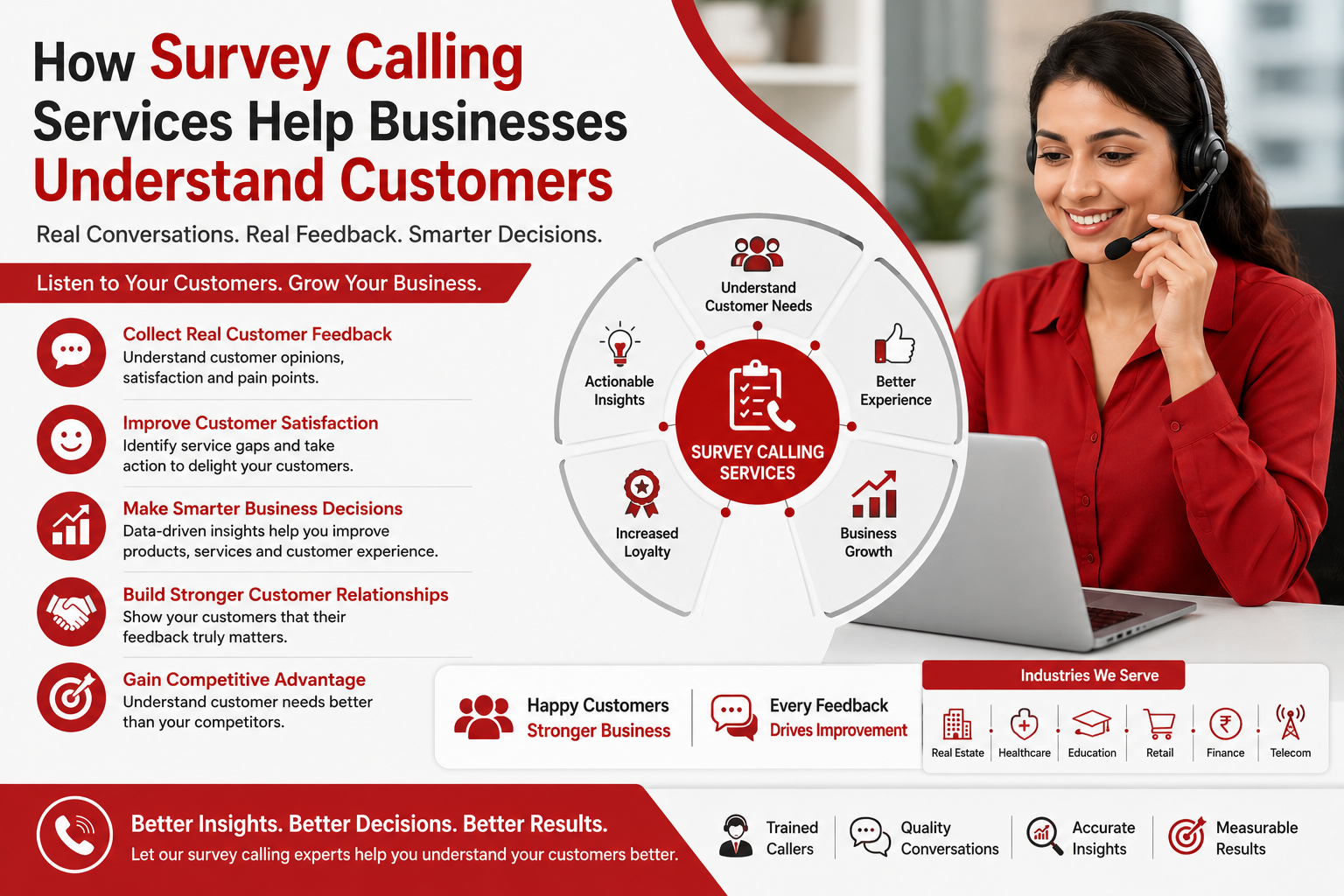
  • Customer feedback collection
  • Survey calling
  • Complaint handling
  • Customer engagement campaigns

Businesses outsource these functions to improve efficiency, reduce operational burden, and focus more on core business activities.

How Outsourced Communication Teams Help Businesses Scale Faster

  1. Reduce Operational Costs

Building and managing an in-house customer communication team requires:

  • Hiring staff
  • Office infrastructure
  • Technology setup
  • Training programs
  • Team management
  • Operational monitoring

Outsourcing communication services significantly reduces these costs.

Businesses can access professional telecalling and customer support services without investing heavily in internal infrastructure.

This allows companies to scale operations more cost-effectively.

  1. Improve Customer Response Time

Fast communication is critical for customer engagement and lead conversion.

Professional communication teams help businesses respond quickly to:

  • Customer inquiries
  • Sales leads
  • Support requests
  • Appointment queries
  • Follow-up communication

Quick response systems improve customer satisfaction and increase conversion opportunities.

  1. Increase Lead Conversion Rates

Many businesses generate leads through:

  • Digital marketing campaigns
  • Social media ads
  • Google Ads
  • Landing pages
  • Referral marketing

However, without proper follow-up communication, many leads never convert.

Outsourced telecalling teams help businesses:

  • Follow up quickly
  • Qualify leads
  • Build customer trust
  • Schedule appointments
  • Maintain engagement

This improves lead nurturing and overall sales conversion.

  1. Allow Businesses to Focus on Core Operations

Customer communication management can consume significant time and resources.

Outsourcing communication processes allows businesses to focus on:

  • Business strategy
  • Product development
  • Sales expansion
  • Marketing growth
  • Operational improvement

Professional communication partners handle customer interaction while businesses focus on scaling.

  1. Access Trained Communication Professionals

Professional telecalling and call center companies already have:

  • Trained communication experts
  • Experienced telecallers
  • Customer support professionals
  • CRM management systems
  • Reporting processes

Businesses gain immediate access to communication expertise without spending time on hiring and training.

This improves customer interaction quality and operational efficiency.

  1. Improve Customer Satisfaction

Customer satisfaction depends heavily on communication quality.

Professional communication teams help businesses provide:

  • Faster responses
  • Better support
  • Personalized communication
  • Regular follow-up
  • Professional customer interaction

Businesses with strong customer communication systems generally achieve better customer retention and brand reputation.

  1. Scale Communication Operations Easily

Business growth often increases customer interaction volume rapidly.

Handling this internally can become difficult.

Outsourced communication teams provide scalability by allowing businesses to:

  • Increase calling capacity quickly
  • Expand support operations
  • Manage seasonal campaigns
  • Handle larger customer bases efficiently

This flexibility helps businesses scale without operational stress.

  1. Improve Customer Retention

Regular communication improves customer loyalty and long-term engagement.

Professional communication teams help businesses stay connected with customers through:

  • Follow-up calls
  • Customer satisfaction surveys
  • Service reminders
  • Feedback collection
  • Complaint resolution

Strong customer relationships improve retention and repeat business opportunities.

  1. Multilingual Communication Improves Reach

India’s customer base is highly diverse.

Multilingual communication teams help businesses engage customers in different regional languages.

Customers are more comfortable interacting in their preferred language, which improves:

  • Communication clarity
  • Customer trust
  • Engagement quality
  • Conversion rates

Multilingual telecalling services are especially valuable for businesses operating across multiple states.

  1. Improve Business Productivity and Efficiency

Outsourced communication systems improve workflow management by handling customer interactions professionally and consistently.

Businesses benefit from:

  • Organized communication processes
  • CRM-based customer tracking
  • Better lead management
  • Improved reporting systems
  • Faster issue resolution

This increases overall operational productivity.

Industries That Benefit Most from Outsourced Communication Teams

Real Estate Industry

Builders and developers use outsourced telecalling for:

  • Lead follow-up
  • Site visit scheduling
  • Customer engagement
  • Project communication

Educational Institutes

Schools and colleges outsource communication for:

  • Admission inquiry handling
  • Parent communication
  • Student engagement
  • Feedback collection

Healthcare Industry

Hospitals and clinics use communication teams for:

  • Appointment scheduling
  • Patient support
  • Feedback surveys
  • Customer assistance

Finance & Insurance

Financial companies outsource communication for:

  • Lead generation
  • Policy renewals
  • Customer support
  • Investment follow-up

Retail & E-commerce

Retail businesses use customer communication services for:

  • Customer support
  • Order assistance
  • Product feedback
  • Customer retention

Why Human Communication Still Matters in 2026

Despite AI automation and chatbot technologies, human communication remains essential because customers still prefer real interaction for important conversations.

Human communication provides:

  • Emotional connection
  • Better understanding
  • Personalized support
  • Faster problem-solving
  • Stronger trust-building

Businesses combining automation with professional human communication achieve the best customer engagement results.

Why Businesses Prefer Outsourced Call Center Services

Outsourced call center and telecalling services help businesses:

  • Reduce operational burden
  • Improve communication quality
  • Scale customer support easily
  • Improve lead management
  • Enhance customer experience
  • Maintain professional communication standards

This makes outsourcing one of the most practical business growth strategies in today’s market.

How Reliable Communication Helps Businesses Scale Faster

Reliable Communication is a professional customer communication and telecalling company based in Pune.

The company provides:

  • Outbound calling services
  • Inbound call center support
  • Customer engagement services
  • Lead generation support
  • Customer follow-up services
  • Survey calling services
  • CRM-based communication management
  • Multilingual telecalling support

Reliable Communication helps businesses improve customer interaction, operational efficiency, lead conversion, and customer satisfaction through structured communication solutions.

Conclusion

Effective communication is one of the most important drivers of business growth and scalability.

Outsourced communication teams help businesses:

  • Improve customer engagement
  • Increase lead conversion
  • Reduce operational costs
  • Improve customer satisfaction
  • Scale operations efficiently
  • Strengthen customer relationships

As businesses continue to grow in competitive markets, professional customer communication management has become essential for sustainable growth.

Businesses looking to scale faster and improve customer communication can partner with Reliable Communication for professional telecalling, customer support, and outsourced communication solutions.

In today’s highly competitive business environment, gaining new customers is important — but retaining existing customers is even more valuable. Businesses across industries are now realizing that long-term growth depends heavily on customer loyalty, repeat business, and strong customer relationships.

This is where telecalling services play a powerful role.

Professional telecalling and customer communication strategies help businesses maintain regular customer interaction, improve satisfaction, resolve issues faster, and build trust. From real estate and educational institutes to finance, healthcare, retail, and IT companies, businesses are increasingly using customer retention strategies through telecalling to reduce customer churn and improve long-term profitability.

Companies like Reliable Communication help businesses strengthen customer engagement through structured outbound calling services, customer support solutions, and follow-up communication systems.

Why Customer Retention Is Important for Business Growth

Customer retention directly impacts:

  • Revenue growth
  • Customer loyalty
  • Brand reputation
  • Customer lifetime value
  • Referral business
  • Operational profitability

Studies consistently show that retaining existing customers costs significantly less than acquiring new ones.

Satisfied customers are more likely to:

  • Purchase repeatedly
  • Recommend your business
  • Leave positive reviews
  • Trust your services
  • Engage with your brand long term

Businesses that focus on customer retention strategies often grow faster and maintain more stable revenue streams.

How Telecalling Helps Improve Customer Retention

Human communication still remains one of the most effective ways to build customer trust.

Unlike automated systems or generic emails, telecalling creates direct personal interaction that helps businesses:

  • Build relationships
  • Solve customer problems quickly
  • Understand customer expectations
  • Improve customer satisfaction
  • Maintain regular engagement

Professional telecalling services help businesses create a stronger emotional connection with customers, which directly improves retention rates.

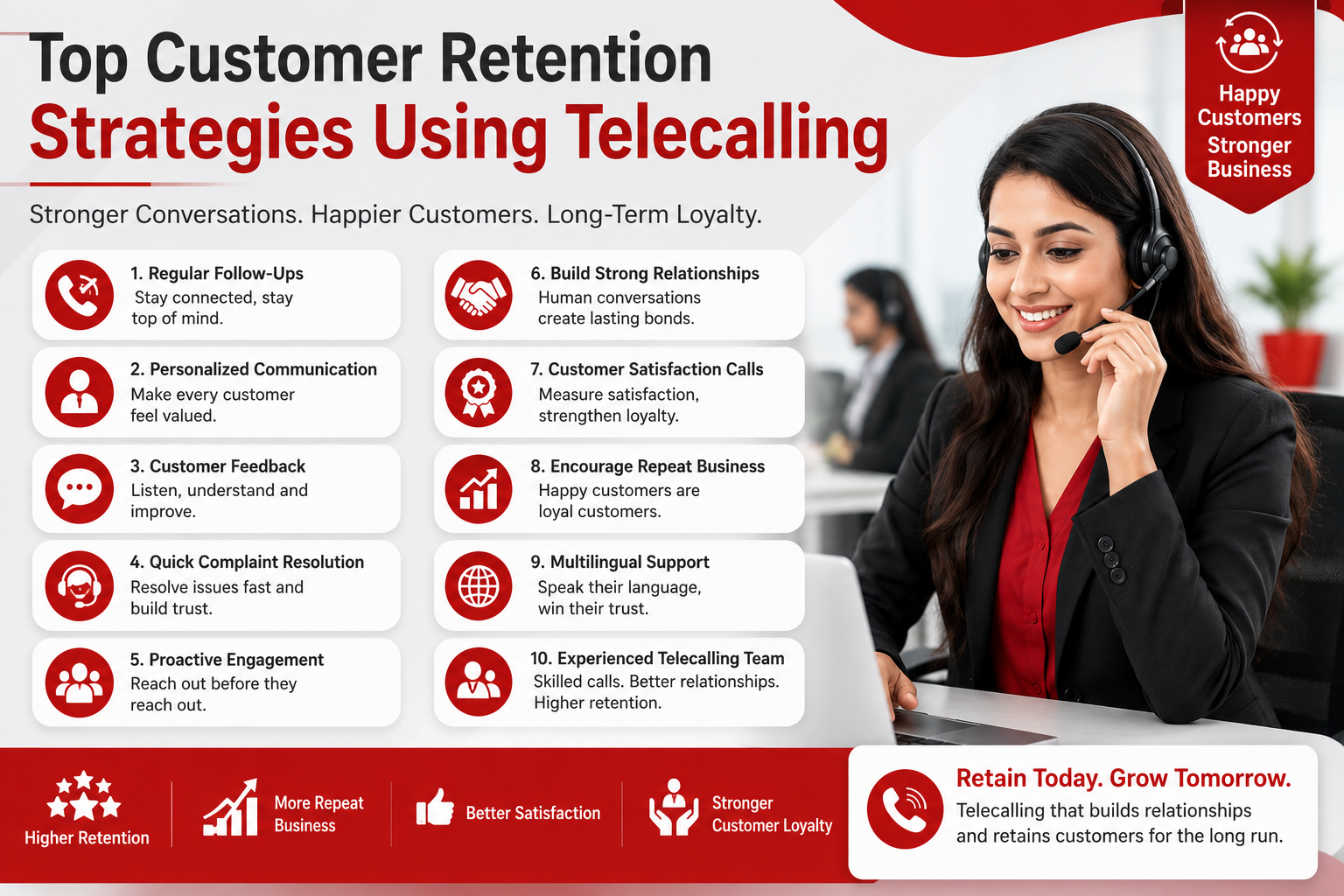
Top Customer Retention Strategies Using Telecalling

  1. Regular Follow-Up Calls

One of the most effective customer retention techniques is consistent follow-up communication.

Many businesses lose customers simply because they stop engaging after the initial sale.

Regular follow-up calls help businesses:

  • Stay connected with customers
  • Understand post-purchase experiences
  • Offer additional support
  • Build trust and loyalty
  • Improve customer satisfaction

Professional outbound calling teams ensure customers feel valued even after completing a purchase or service.

  1. Personalized Customer Communication

Customers prefer businesses that understand their needs.

Personalized telecalling strategies involve:

  • Addressing customers by name
  • Understanding purchase history
  • Providing relevant solutions
  • Offering customized recommendations

This personalized communication creates a positive customer experience and improves long-term engagement.

Businesses using CRM-integrated telecalling services can manage customer interaction more effectively and improve retention.

  1. Customer Feedback Collection

Customer feedback surveys are essential for improving services and understanding customer expectations.

Telephonic survey calling services help businesses collect genuine customer insights through human interaction.

Feedback calls help identify:

  • Service quality issues
  • Customer complaints
  • Product improvement areas
  • Customer satisfaction levels

Businesses that actively listen to customers build stronger customer relationships and reduce customer churn.

  1. Quick Complaint Resolution

Fast issue resolution is one of the biggest drivers of customer loyalty.

Customers become frustrated when their concerns are ignored or delayed.

Dedicated customer support telecalling teams help businesses:

  • Respond faster
  • Handle complaints professionally
  • Provide real-time assistance
  • Maintain customer trust

Quick response systems significantly improve customer experience and brand reputation.

  1. Proactive Customer Engagement

Businesses should not wait for customers to contact them.

Proactive telecalling strategies include:

  • Service reminder calls
  • Renewal reminders
  • Product update calls
  • Relationship-building conversations
  • Special offer notifications

This regular engagement helps businesses remain visible and connected with customers.

  1. Building Trust Through Human Interaction

Despite the rise of automation and AI chatbots, human communication still plays a major role in customer retention.

Customers trust businesses more when they can speak directly with real people.

Telecalling services create:

  • Emotional connection
  • Better communication clarity
  • Personalized support
  • Faster understanding of customer needs

This human touch helps businesses maintain long-term customer loyalty.

  1. Customer Satisfaction Calls

Customer satisfaction calling services help businesses understand how customers feel about their products, services, or support experience.

These calls help businesses:

  • Improve customer experience
  • Measure service quality
  • Identify dissatisfied customers early
  • Prevent negative online reviews

Businesses that regularly monitor customer satisfaction perform better in competitive markets.

  1. Lead Nurturing and Relationship Management

Not all customers make immediate purchasing decisions.

Telecalling helps businesses nurture leads and maintain long-term relationships through:

  • Follow-up communication
  • Product education
  • Trust-building conversations
  • Appointment scheduling
  • Customer engagement campaigns

Strong relationship management improves both customer retention and conversion rates.

  1. Multilingual Customer Support

India’s diverse customer base requires communication in multiple languages.

Multilingual telecalling services improve customer comfort and communication quality, especially in industries like:

  • Real estate
  • Healthcare
  • Educational institutes
  • Finance
  • Telecom

Customers are more likely to stay loyal to businesses that communicate comfortably in their preferred language.

  1. Outsourcing Professional Telecalling Services

Many businesses struggle to manage customer communication internally due to:

  • Lack of trained staff
  • Operational costs
  • Time limitations
  • Scaling challenges

Outsourcing customer communication and telecalling services helps businesses:

  • Reduce operational burden
  • Improve customer engagement
  • Increase efficiency
  • Maintain professional communication standards

Professional telecalling companies like Reliable Communication provide structured customer communication solutions that help businesses improve customer retention and customer satisfaction.

Industries That Benefit Most from Customer Retention Telecalling

Real Estate

Builders use telecalling for:

  • Site visit follow-ups
  • Buyer engagement
  • Project updates
  • Customer relationship management

Educational Institutes

Schools and colleges use telecalling for:

  • Admission follow-up
  • Parent communication
  • Student engagement
  • Feedback collection

Healthcare

Hospitals use customer support calling for:

  • Appointment reminders
  • Patient feedback
  • Service support
  • Relationship management

Finance & Insurance

Financial companies use telecalling for:

  • Policy renewals
  • Investment follow-up
  • Customer engagement
  • Relationship management

Retail & E-commerce

Retail businesses use telecalling to:

  • Improve customer experience
  • Handle complaints
  • Offer personalized recommendations
  • Increase repeat purchases

Why Telecalling Still Works in 2026

Even with AI tools and automated communication systems, telecalling remains highly effective because customers still value human interaction.

Telecalling provides:

  • Personalized communication
  • Better customer understanding
  • Real-time problem resolution
  • Emotional connection
  • Stronger relationship building

Businesses combining technology with professional human communication are achieving better customer retention results.

How Reliable Communication Helps Businesses Improve Customer Retention

Reliable Communication is a professional customer communication and telecalling company based in Pune.

The company provides:

  • Outbound calling services
  • Customer follow-up services
  • Customer satisfaction surveys
  • Lead nurturing support
  • Contact center services
  • Customer engagement campaigns
  • Multilingual telecalling support
  • CRM-based communication management

Reliable Communication helps businesses across industries improve customer interaction, customer loyalty, and long-term business growth through structured telecalling solutions.

Conclusion

Customer retention is one of the most important factors for sustainable business growth.

Businesses that invest in professional customer communication strategies gain significant advantages in:

  • Customer loyalty
  • Repeat business
  • Brand trust
  • Customer satisfaction
  • Revenue stability

Telecalling remains one of the most effective customer retention tools because it creates direct human connection and personalized communication.

From follow-up calling and customer feedback collection to complaint resolution and relationship management, professional telecalling services help businesses maintain strong customer relationships and scale faster.

Businesses looking to improve customer retention and customer engagement can partner with Reliable Communication for professional telecalling and customer communication solutions.
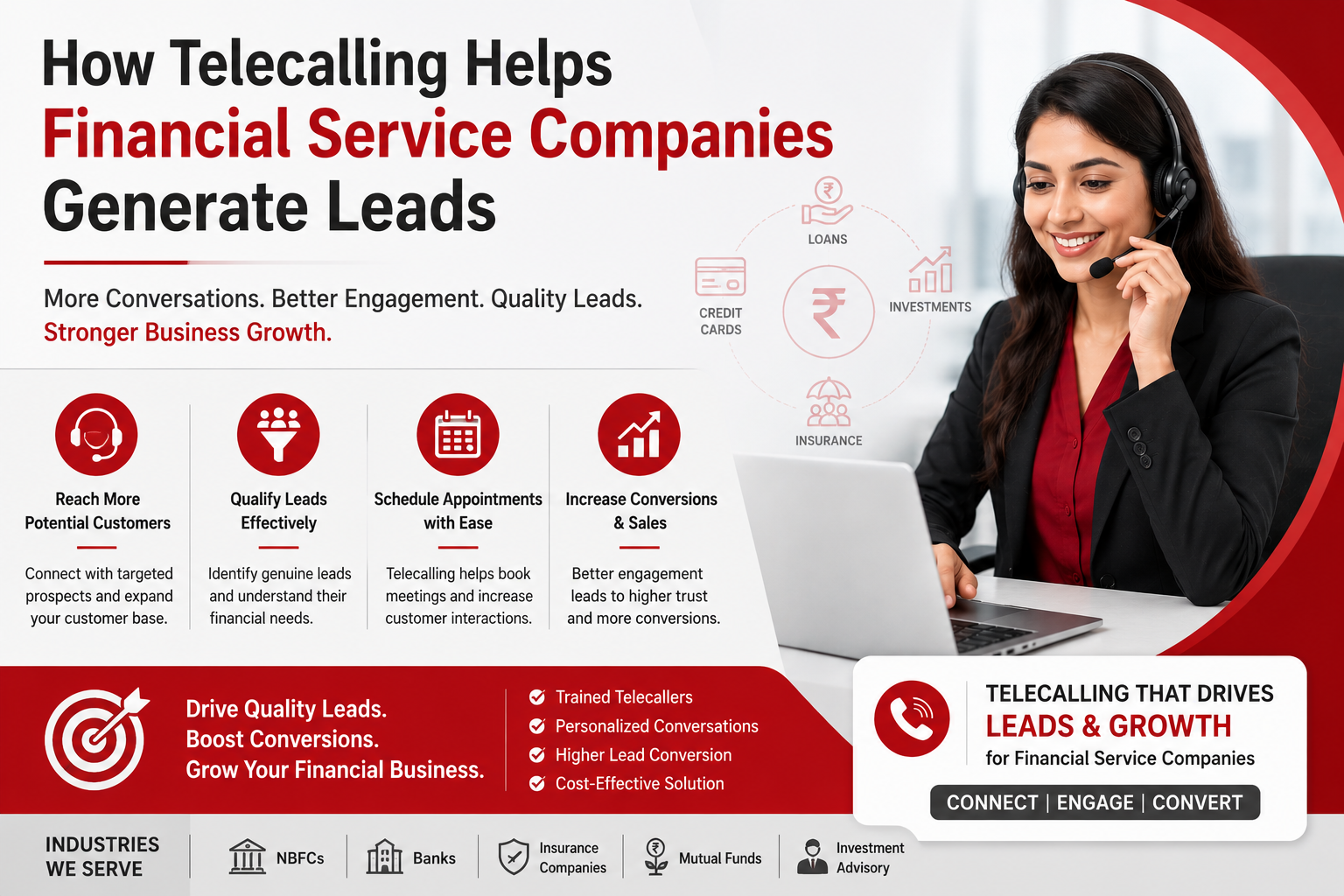
In today’s highly competitive real estate market, generating quality leads is only half the battle. The real challenge for builders and real estate companies is converting inquiries into actual property site visits.

Many potential buyers show interest online, fill inquiry forms, or click on ads — but without proper follow-up communication, those leads often go cold.

This is where real estate telecalling services play a critical role.

Professional telecalling teams help builders and developers engage leads, build trust, answer customer queries, schedule appointments, and ultimately increase property site visits.

Companies like Reliable Communication provide specialized telecalling and customer communication services that help real estate businesses improve lead conversion and sales performance.

Why Site Visits Matter in Real Estate Sales

In real estate, site visits are one of the most important stages in the sales funnel.

Most property buyers do not make purchasing decisions based only on online advertisements or brochures. They want to:

  • Visit the property location
  • Experience the project physically
  • Understand amenities
  • Evaluate connectivity
  • Interact with sales representatives
  • Build trust with the builder

The more site visits a project receives, the higher the chances of property bookings and conversions.

This is why real estate companies heavily focus on site visit generation strategies and customer follow-up communication.

Challenges Real Estate Companies Face in Lead Conversion

Real estate businesses often generate large numbers of leads through:

  • Google Ads
  • Meta Ads
  • Property portals
  • Social media campaigns
  • Landing pages
  • Referral marketing

However, many companies struggle with:

  • Delayed follow-up
  • Unattended leads
  • Poor customer communication
  • Low lead engagement
  • Missed site visit opportunities
  • Inconsistent follow-up processes

Without structured communication systems, even high-quality property leads may never convert into site visits.

How Telecalling Services Help Real Estate Companies

  1. Faster Lead Response Improves Conversion

Speed matters in real estate lead generation.

When a potential buyer submits an inquiry, immediate follow-up significantly increases the chances of conversion.

Professional outbound telecalling teams help builders:

  • Respond quickly to inquiries
  • Connect with leads instantly
  • Understand buyer requirements
  • Maintain customer engagement

Quick response builds customer confidence and increases the probability of scheduling a property site visit.

  1. Personalized Customer Communication

Every property buyer has different preferences, budgets, and requirements.

Professional telecalling services provide personalized communication based on:

  • Budget range
  • Preferred location
  • Property type
  • Family requirements
  • Investment goals

This personalized interaction helps build trust and improves customer engagement.

Human communication remains far more effective than automated responses in real estate sales.

  1. Lead Qualification and Filtering

Not every inquiry is a serious buyer.

Telecalling services help real estate companies qualify leads by identifying:

  • Genuine buyers
  • Budget suitability
  • Purchase timeline
  • Investment intent
  • Site visit readiness

This helps builders focus their sales efforts on high-potential leads and improve conversion efficiency.

  1. Site Visit Appointment Scheduling

One of the biggest advantages of telecalling is appointment coordination.

Professional telecalling teams help:

  • Schedule site visits
  • Confirm appointments
  • Coordinate timings
  • Share project details
  • Send reminders

This organized communication process significantly improves site visit attendance rates.

  1. Continuous Lead Follow-Up

Many real estate buyers do not make immediate decisions.

Consistent follow-up communication is essential to keep leads engaged.

Telecalling teams help builders maintain regular communication through:

  • Follow-up calls
  • Project updates
  • Price change notifications
  • Offer information
  • Construction progress updates

Regular engagement increases customer interest and improves the chances of future site visits.

  1. Building Trust Through Human Interaction

Real estate is a high-value purchase decision.

Customers prefer speaking with real people before making commitments.

Professional telecalling services help create:

  • Personal connection
  • Buyer confidence
  • Better communication clarity
  • Trust-building conversations

This human interaction is extremely important in converting online inquiries into physical property visits.

  1. Handling Customer Queries Professionally

Potential buyers often have multiple questions related to:

  • Pricing
  • EMI options
  • Amenities
  • Connectivity
  • Legal approvals
  • Construction timelines

Dedicated telecalling teams help answer customer queries professionally and maintain buyer engagement.

Clear communication helps reduce confusion and encourages customers to visit the project site.

  1. Improving Real Estate Marketing ROI

Builders invest heavily in digital marketing campaigns.

Without proper follow-up systems, marketing budgets may get wasted.

Professional telecalling services help improve:

  • Lead conversion rates
  • Site visit ratios
  • Customer engagement
  • Sales funnel efficiency
  • Marketing ROI

Effective customer communication ensures that generated leads are properly nurtured and converted.

Why Outsourcing Real Estate Telecalling Services Is Beneficial

Managing an in-house telecalling team can be challenging due to:

  • Hiring costs
  • Training requirements
  • Infrastructure setup
  • Staff management
  • Scalability issues

Outsourcing real estate telecalling services helps businesses:

  • Reduce operational costs
  • Access trained calling professionals
  • Scale campaigns quickly
  • Improve response management
  • Maintain structured communication systems

Professional telecalling companies already have the experience, systems, and customer communication expertise required for real estate lead management.

Role of CRM Integration in Real Estate Telecalling

Modern telecalling services often work with CRM-based communication systems.

CRM integration helps:

  • Track customer interactions
  • Monitor lead stages
  • Schedule follow-ups
  • Manage appointment reminders
  • Analyze conversion performance

This organized lead management process helps real estate companies improve efficiency and conversion rates.

Industries and Projects That Benefit from Real Estate Telecalling

Telecalling services are highly useful for:

  • Residential projects
  • Commercial properties
  • Luxury apartments
  • Township projects
  • Plotting projects
  • Villa projects
  • Affordable housing
  • Pre-launch campaigns

Builders across India are increasingly using telecalling services to improve customer communication and property sales.

Why Telecalling Still Works in 2026

Even with AI chatbots and automated messaging systems, telecalling remains highly effective because:

  • Buyers prefer human communication
  • Property purchases involve emotional decisions
  • Real-time conversations build trust
  • Personalized interaction improves engagement
  • Direct communication improves site visit conversion

Businesses combining digital marketing with professional telecalling services achieve better results than businesses relying only on automated systems.

How Reliable Communication Helps Real Estate Companies

Reliable Communication provides professional real estate telecalling and customer communication services for builders and developers.

Their services include:

  • Real estate outbound calling
  • Lead follow-up services
  • Site visit appointment scheduling
  • Customer engagement support
  • Telemarketing services
  • CRM-based communication management
  • Customer inquiry handling
  • Multilingual telecalling support

Reliable Communication helps real estate companies improve lead nurturing, increase property site visits, and enhance overall sales conversion.

Conclusion

Generating leads is only the beginning of the real estate sales process. The real success lies in converting inquiries into actual property site visits and bookings.

Professional telecalling services help builders:

  • Respond faster
  • Build customer trust
  • Maintain regular follow-up
  • Improve lead qualification
  • Increase site visit conversions
  • Improve marketing ROI

In today’s competitive real estate industry, customer communication has become one of the most important factors for successful lead conversion.

Businesses looking to improve property sales and customer engagement can partner with Reliable Communication for professional telecalling and real estate customer communication solutions.

In real estate, communication doesn’t just support sales —
it decides whether a deal moves forward or dies silently.

Every missed call, delayed follow-up, or poorly routed enquiry directly impacts site visits, conversions, and revenue. Yet most real estate businesses still manage communication using intuition, spreadsheets, or disconnected systems.

Data-driven communication changes this completely.


Real Estate Communication Is a High-Stakes System

A typical real estate communication ecosystem includes:

  • Website and portal enquiries

  • Inbound calls from multiple projects

  • WhatsApp follow-ups and brochures

  • Site visit scheduling

  • CRM updates

  • Channel partner coordination

Each interaction generates critical behavioural data — but most of it remains unused.

The result?
Leads fall through cracks, teams chase the wrong prospects, and management sees only partial reality.


The Hidden Cost of Poor Communication in Real Estate

Real estate businesses often face:

  • Missed or unanswered calls during peak enquiry hours

  • Multiple agents calling the same lead

  • Delayed follow-ups after site visits

  • No visibility into lead quality vs call volume

  • No insight into which campaigns actually convert

These are not sales problems.
They are communication intelligence problems.


What Data-Driven Communication Means for Real Estate

Data-driven communication is about designing communication flows using evidence, not assumptions.

It answers questions like:

  • Which source delivers serious buyers, not just enquiries?

  • How fast should follow-ups happen to maximise site visits?

  • Which agent communication style converts better?

  • When should automation step in — and when should humans intervene?

For real estate, these answers directly affect revenue velocity.


Key Communication Decisions That Must Be Data-Led

1. Lead Routing & Response Time

Speed is everything in real estate.

Data helps determine:

  • Ideal response time per lead source

  • Skill-based routing (new lead vs hot prospect)

  • Time-of-day call success rates

This ensures the right lead reaches the right agent at the right moment.


2. Channel Strategy: Calls vs WhatsApp vs Automation

Not every enquiry needs a call.

Data reveals:

  • Which prospects respond better on WhatsApp

  • When automated nudges increase site visit confirmations

  • Where human conversations are essential to close deals

This reduces agent fatigue while improving engagement quality.


3. Site Visit Conversion Intelligence

Many leads schedule site visits — fewer convert.

Data-driven communication helps analyze:

  • Follow-up timing after site visits

  • Call frequency vs drop-offs

  • Messaging that increases second visits

This turns communication into a conversion accelerator, not just a reminder system.


4. Agent Performance & Training Insights

Instead of subjective reviews, data enables:

  • Call outcome analysis

  • Script effectiveness tracking

  • Objection handling insights

  • Conversion-to-call ratios per agent

This allows targeted coaching instead of blanket pressure.


5. Campaign & Project-Level Visibility

Marketing spend without communication data is incomplete.

Data connects:

  • Campaign source → call quality → site visits → bookings

  • Project-wise enquiry patterns

  • Agent performance per project

This empowers leadership with real-time decision clarity.


Why Real Estate Needs This Now More Than Ever

The market is more competitive and customer expectations are higher:

  • Faster responses

  • Clear information

  • Fewer follow-ups

  • Seamless handoffs between teams

Without data-driven communication:

  • Trust erodes

  • Costs increase

  • Sales cycles stretch

With it:

  • Lead wastage reduces

  • Conversions improve

  • Sales teams work smarter, not harder


The Role of a Strategic Communication Partner

Implementing data-driven communication in real estate is not just about software.

It requires:

  • Communication audits across projects

  • Telecom and CRM integration

  • Process redesign for lead handling

  • Automation with human balance

  • Continuous performance optimisation

This is where Reliable Communications adds value — helping real estate businesses build intelligent, scalable communication systems that directly impact sales outcomes.


Final Perspective

Real estate success depends on timing, trust, and clarity.
Data-driven communication ensures none of these are left to chance.

When communication is guided by insight, every call, message, and follow-up works with purpose.

That’s how modern real estate businesses scale.

Struggling with missed leads or inefficient follow-ups?
Reliable Communications helps real estate businesses design data-driven communication frameworks that improve response time, conversions, and visibility.

📞 Speak with our real estate communication specialists.

Admissions are the lifeline of every educational institute. Whether it is a reputed college in Pune, a private school, or a professional training institute, the admission cycle brings with it enormous challenges. From reaching prospective students to handling inquiries and following up with parents, the entire process can become overwhelming when managed in-house. This is where Reliable Communication – one of the top Call Center and Telesales company in Pune – stepped in to transform the way schools and colleges approach admissions.

Understanding the Admission Challenges in Schools and Colleges

Educational institutions often rely on their internal administrative staff to manage inquiries, calls, and follow-ups during admission season. While this may work on a small scale, larger institutions face several pain points:
• High call volumes leading to unanswered inquiries.
• Untrained staff struggling to handle parent and student queries professionally.
• Poor follow-up systems resulting in loss of potential admissions.
• Time constraints, as faculty and administrative teams get pulled away from their core duties.

One leading college in Pune shared how their admission team, despite working long hours, was unable to keep up with over 5,000 inquiries during the admission season. They realized they needed a dedicated solution that combined professional tele-calling expertise with a structured admission process. That’s when they partnered with Reliable Communication.

Why Reliable Communication?

As a Call center company in Pune with years of experience in handling tele-sales and customer outreach, Reliable Communication brings:
• A dedicated tele-calling team trained to handle educational inquiries.
• Multilingual support, enabling smooth communication with parents and students across Maharashtra and India.
• Data-driven admission follow-ups, ensuring every lead is nurtured until closure.
• Professional systems that maintain accuracy, consistency, and student data confidentiality.

For schools and colleges, this meant outsourcing the stress of admissions to experts who not only understand calling but also the sensitive nature of interacting with parents and students.

Applying the E-E-A-T Framework

Reliable Communication follows the E-E-A-T principles – Experience, Expertise, Authoritativeness, and Trustworthiness – to build lasting partnerships with educational institutions.
• Experience: Years of working with schools, colleges, and training institutes have given Reliable Communication deep insights into how admission seasons operate.
• Expertise: Their team is well-trained in professional tele-calling, objection handling, and persuasive communication – all critical in converting inquiries into confirmed admissions.
• Authoritativeness: As a recognized tele-calling company for school and college admissions, Reliable Communication has built a reputation in Pune and beyond for delivering results.
• Trustworthiness: Confidentiality of student and parent data is a top priority, ensuring institutions can rely on them without hesitation.

Case Study: How Outsourcing Admissions Helped a Pune College Grow

A reputed management college in Pune was struggling with its in-house admission team. Despite running digital campaigns and offline promotions, they noticed a 40% drop in conversions compared to the previous year. The key issue? Their in-house team could not handle the follow-up process effectively.

After partnering with Reliable Communication:

• The tele-calling team contacted every student who had shown interest within 24 hours.
• Customized call scripts helped address parent concerns around course fees, placements, and faculty.
• Regular follow-ups were scheduled until the admission was confirmed.
• Reports and dashboards gave the college clear insights into the progress.

Within just one admission cycle, the college saw a 60% increase in admissions and a smoother process overall. The Dean later admitted that outsourcing the calling process was one of their best strategic decisions, as it allowed faculty to focus on academics while Reliable Communication managed outreach professionally.

Benefits of Admissions Process Outsourcing

For schools, colleges, and institutes, the benefits of outsourcing admissions to a trusted partner like Reliable Communication are significant:
1. Scalability – Whether an institute gets 500 inquiries or 50,000, Reliable Communication can scale operations quickly.
2. Professional Communication – Parents and students receive polite, informed, and clear responses.
3. Data Management – Every inquiry is tracked, categorized, and followed up systematically.
4. Time-Saving – Internal staff are free to focus on academics, administration, and student services.
5. Higher Conversion Rates – With structured follow-ups, institutes see a direct increase in admissions.

How Schools and Institutes Have Benefited

• Private Schools in Pune: By outsourcing to Reliable Communication, schools improved their enrollment numbers and ensured parents always received timely updates about admission procedures.
• Engineering Colleges: Colleges running multiple admission rounds benefited from structured call campaigns that guided students at every step.
• Training Institutes: For skill development centers, Reliable Communication’s telesales expertise helped convert inquiries into course enrollments with higher efficiency.

Reliable Communication’s Approach

The company doesn’t believe in a one-size-fits-all solution. For every institution, they:
• Understand the admission goals.
• Build customized tele-calling scripts.
• Train callers to represent the institute professionally.
• Provide transparent reports and progress updates.
This tailored approach ensures that schools, colleges, and institutes see real impact during their admission cycles.

A Smarter Way Forward for Admissions

In today’s competitive education environment, schools and colleges cannot afford to miss out on potential students due to poor follow-up or ineffective communication. Partnering with Reliable Communication – the leading call center company in Pune for school and college admissions – ensures that admissions are handled with professionalism, empathy, and efficiency.
If your institute is looking to simplify its admission process, increase conversions, and provide a better experience for parents and students, it’s time to explore admissions process outsourcing for schools, colleges, and institutes with Reliable Communication.

Connect with Reliable Communication today and discover how our call center, telesales, and tele-calling services can help your school, college, or institute achieve its admission goals with ease. Visit www.reliablecommunication.co.in to know more.

In the competitive world of e-commerce, seamless communication plays a critical role in ensuring customer satisfaction, streamlining operations, and driving sales. As online businesses grow, the need for robust telecommunication solutions becomes indispensable. Companies like Reliable Communications offer tailored telecommunication services that empower e-commerce businesses to stay connected and efficient.

Here’s why telecommunication solutions are vital for the success of e-commerce businesses.

1. Enhancing Customer Support

Prompt and efficient customer support can make or break an e-commerce business. Telecommunication solutions like IVR (Interactive Voice Response) and telecalling services enable businesses to handle customer queries quickly and efficiently.

  • IVR Systems: Automate call routing, reducing wait times and ensuring customers are connected to the right department.
  • Telecalling Services: Offer personalized support, building trust and enhancing the customer experience.

Reliable Communications ensures these systems are tailored to meet the unique needs of your e-commerce platform.

2. Streamlining Order and Delivery Communication

Clear communication during the order and delivery process is essential. Telecommunication tools such as missed call alerts and SMS updates keep customers informed about their order status, from confirmation to delivery.

  • Order Notifications: Real-time SMS updates ensure customers are never left guessing about their purchases.
  • Delivery Alerts: Proactive communication reduces the chances of missed deliveries and increases customer satisfaction.

3. Driving Marketing Campaigns

Telecommunication plays a pivotal role in e-commerce marketing strategies. Bulk SMS and WhatsApp Marketing are cost-effective methods to promote products, announce sales, or send personalized offers.

  • Bulk SMS Campaigns: Reach thousands of customers instantly with time-sensitive deals.
  • WhatsApp Marketing: Engage customers with interactive and personalized messaging, enhancing brand loyalty.

Reliable Communications offers tools that help e-commerce businesses execute targeted marketing campaigns effectively.

4. Improving Internal Communication

Efficient internal communication is crucial for smooth operations in e-commerce businesses. Cloud telephony systems enable teams to stay connected, whether they’re handling inventory, coordinating with suppliers, or managing customer inquiries.

  • Centralized Communication: Manage calls, voicemails, and messages from a single platform.
  • Team Collaboration: Enable seamless communication between departments for better efficiency.

5. Boosting Customer Retention

Staying connected with customers post-purchase is key to building long-term relationships. Telecommunication solutions like automated follow-up calls or feedback surveys can help e-commerce businesses gather insights and show customers they care.

  • Follow-Up Calls: Express gratitude for purchases and offer assistance if needed.
  • Feedback Surveys: Collect customer opinions to improve services and build loyalty.

Why Choose Reliable Communications?

Reliable Communications understands the unique challenges of e-commerce businesses and provides customized telecommunication solutions to address them. With expertise in IVR systems, bulk SMS, telecalling, and WhatsApp marketing, they ensure your business stays connected with customers at every stage of their journey.

By integrating Reliable Communications’ solutions, your e-commerce business can:

  • Deliver exceptional customer experiences.
  • Streamline operations.
  • Execute impactful marketing campaigns.
  • Foster long-term customer relationships.

In today’s competitive business landscape, providing a seamless and efficient customer experience is no longer a luxury—it’s a necessity. As companies grow and interact with more customers, managing inquiries, requests, and support efficiently becomes increasingly challenging. This is where Interactive Voice Response (IVR) systems come into play. IVR technology has evolved into an indispensable tool for businesses, allowing them to enhance customer service while streamlining operations.

This article explores how IVR systems can improve customer experience, the benefits they bring to businesses, and why implementing IVR is a smart move for companies aiming to improve customer satisfaction and operational efficiency.

What is IVR?

Interactive Voice Response (IVR) is a technology that allows customers to interact with a business through voice or keypad inputs via a phone system. It is commonly used to route customer calls to the appropriate department, provide automated responses to common queries, or collect information without the need for a live agent. IVR systems are widely used across industries, including banking, healthcare, retail, and telecommunications, to automate routine processes and provide 24/7 service.

How IVR Enhances Customer Experience

1. Efficient Call Routing and Reduced Wait Times

One of the biggest frustrations for customers is being transferred multiple times before reaching the right department. IVR systems allow businesses to efficiently route calls to the appropriate department or agent by offering a menu of options. Customers can select the option that best suits their needs, ensuring they are connected with the right person the first time.

By automating this process, businesses reduce wait times and eliminate unnecessary call transfers, which significantly improves the customer experience.

2. 24/7 Availability

Customers expect round-the-clock service, especially in today’s fast-paced world. IVR systems provide businesses with the ability to offer 24/7 service, even outside of normal business hours. Customers can access basic information, such as account balances, order statuses, or store locations, without needing to speak to a live agent. This level of accessibility ensures that customers are never left waiting for answers, which boosts satisfaction.

For businesses, providing 24/7 service without the need for additional staffing is a cost-effective way to enhance customer service.

3. Personalized Interactions

Modern IVR systems can integrate with customer databases, allowing businesses to provide personalized interactions. When customers call, the IVR system can identify them by their phone number, greet them by name, and offer customized options based on their previous interactions or preferences. This level of personalization makes the customer feel valued and creates a more engaging experience.

For example, a bank’s IVR system can offer balance inquiries or transaction histories as the first option to a customer who frequently checks these details, saving time and adding a personal touch to the interaction.

4. Self-Service Options

Self-service is becoming increasingly popular among customers who prefer to resolve issues or find information on their own. IVR systems offer a variety of self-service options, such as bill payments, appointment scheduling, or order tracking, allowing customers to complete these tasks without needing to speak to a representative. This convenience empowers customers to take control of their experience and reduces the workload for customer service teams.

Businesses that offer self-service options can handle more calls simultaneously, improving overall service efficiency.

5. Multi-Language Support

For businesses operating in diverse markets, language barriers can be a significant challenge. IVR systems can be programmed to offer multilingual support, allowing customers to select their preferred language from the initial menu. This feature is especially valuable for global companies that need to serve customers in different regions or for businesses that cater to non-native speakers in their home country.

By offering support in multiple languages, businesses ensure a smooth and inclusive experience for all customers, which can lead to higher customer satisfaction and loyalty.

Benefits of IVR for Businesses

1. Cost Efficiency

One of the primary benefits of implementing an IVR system is cost savings. IVR systems automate many routine tasks, such as handling common customer inquiries or routing calls to the appropriate department. By reducing the need for live agents to handle these tasks, businesses can cut labor costs while still providing high-quality customer service.

Additionally, IVR systems can handle a large volume of calls simultaneously, ensuring that no customer is left waiting due to limited staffing. This efficiency allows businesses to scale their operations without a significant increase in operational costs.

2. Increased Customer Retention

A smooth, efficient, and personalized customer experience is key to customer retention. IVR systems help businesses provide faster service, personalized interactions, and 24/7 availability—all of which contribute to higher levels of customer satisfaction. When customers feel that their needs are being met promptly and efficiently, they are more likely to stay loyal to the brand.

3. Improved Data Collection

IVR systems can also be used to gather valuable customer data, such as feedback, preferences, or behavior patterns. This data can be analyzed to gain insights into customer needs, enabling businesses to refine their services and improve customer experience further. Automated surveys conducted via IVR after a call can provide immediate feedback on customer satisfaction, allowing businesses to address issues quickly.

4. Scalability

As a business grows, so does the volume of customer inquiries and support requests. IVR systems are highly scalable, making them an ideal solution for businesses experiencing growth or seasonal fluctuations in call volumes. Whether a business handles 100 calls per day or 10,000, IVR systems can scale to meet the demand without sacrificing the quality of service.

Have you ever asked a friend if they could come over to play, and they said, “Maybe”? It can be confusing, right? You’re not sure if they will come or not. This is kind of like what happens in business when people say “maybe” to buying something. Additionally, They haven’t made up their minds yet. But guess what? There’s a way to turn that “maybe” into a “yes,” and it’s called a follow-up call!

What is a Follow-Up Call?

A follow-up call is when someone calls another person again to remind them about something they talked about earlier. In business, this usually happens after someone shows interest in buying a product but hasn’t made a decision yet. Moreover, Think of it like reminding your friend about your invitation to play; you call them again to see if they have decided yet.

Why Are Follow-Up Calls Important?

Imagine you ask your friend to come over once, and they say, “Maybe,” but then you never talk about it again. They might forget or think you don’t really care if they come or not. Additionally, The same thing happens in business. If someone says “maybe” and they don’t hear back, they might forget or lose interest. A follow-up call shows that you care and helps them remember why they were interested in the first place.

How Do Follow-Up Calls Work?

  1. Friendly Reminder: A follow-up call is like a gentle nudge. It’s a friendly reminder about the last conversation. Moreover, It’s like saying, “Hey, remember how you liked this toy? Do you still want it?”
  2. Answering Questions: Sometimes, people say “maybe” because they have questions or are unsure about something. A follow-up call gives them a chance to ask more questions and get more information. Just like your friend might ask, “What game will we play?” before deciding to come over.
  3. Showing That You Care: Making a follow-up call shows that you care about the person and their decision. Moreover, It’s like when you really want your friend to come over, so you check in with them. It shows that you’re interested in them and not just in making a sale.

Tips for a Good Follow-Up Call

Making a follow-up call isn’t just about reminding someone; it’s about doing it the right way. Here are some tips to make sure the call goes well:

  1. Be Friendly: Always be nice and polite. Think of how you would talk to your friend. You want the person to feel comfortable and happy to talk to you.
  2. Ask Questions: Find out if they have any doubts or need more information. Asking questions shows you care about their needs.
  3. Listen Carefully: Pay attention to what the person says. Additionally, Listening is very important because it helps you understand what they want or need.
  4. Be Patient: Don’t rush them. Moreover,Sometimes, people need time to think before making a decision. Give them the space they need to decide.

Real-Life Example: Turning “Maybe” into “Yes”

Let’s say you have a lemonade stand. One day, a person stops by and tastes your lemonade. They say it’s good but don’t buy it right away. Instead, they say, “Maybe I’ll come back later.” A follow-up call is like waving at them the next day and saying, “Hey, remember how much you liked the lemonade? We have a fresh batch today! Would you like some?”
By doing this, you remind them how much they liked it and encourage them to buy. They might say, “You know what? I do want some lemonade!” And just like that, a “maybe” becomes a “yes.”

Why Follow-Up Calls Matter

Follow-up calls are important because they help keep the conversation going. They turn a maybe into a yes by:

  • Reminding: People often get busy and forget. A follow-up call reminds them about what they liked.
  • Clarifying: It helps clear up any doubts or questions they might have.
  • Connecting: It builds a connection and shows that you care about their decision.

In the end, follow-up calls are all about being helpful and friendly. Moreover, They are a great way to turn a “maybe” into a “yes” by reminding people of what they were interested in, answering their questions, and showing that you care. So next time someone says “maybe,” remember that a follow-up call could be just what they need to make up their mind!

Telemarketing is when people call others on the phone to talk about products or services. It might sound easy, but it takes a lot of practice and skill to do it well. If you have a telemarketing team, you want them to work as efficiently as possible. Efficiently means getting the job done in the best way without wasting time or effort. Here’s how you can train your telemarketing team to be as efficient as possible.

Understanding the Basics

First, everyone on the team should understand what telemarketing is all about. Telemarketing isn’t just calling people and reading a script. It involves listening carefully, answering questions, and making sure the person on the other end of the line feels heard and understood.

To train your team, you can start with some simple role-playing exercises. One person can pretend to be the customer, and another can be the telemarketer. This helps everyone learn how to handle different situations, like when a customer says “No” or has a lot of questions.

The Importance of a Script

A script is a written guide that helps telemarketers know what to say. But, it’s important not just to read the script like a robot. Instead, telemarketers should use the script as a guide and speak in a friendly and natural way.

During training, let your team practice using the script until they feel comfortable with it. They should know the script so well that they can answer questions and have a conversation without sounding like they’re reading from a piece of paper.

Listening Skills Matter

One of the most important skills in telemarketing is listening. Your team needs to listen to what the customer is saying so they can respond in the right way. If a customer has a problem, the telemarketer should listen carefully to understand the issue before offering a solution.

To improve listening skills, you can play a game during training. One person can say something, and the other person has to repeat it back in their own words. This helps everyone learn how to listen better and make sure they understand the customer.

Handling Rejections

In telemarketing, not everyone will say “Yes.” Some people will say “No” or hang up the phone. This is called rejection, and it can be hard for telemarketers to deal with. But, it’s important to train your team to stay positive even when they hear “No.”

During training, you can teach your team that rejection is a normal part of the job. They should be polite and thank the customer for their time, even if the customer isn’t interested. This helps them stay positive and focused on the next call.

Time Management

Time management means using time in the best way possible. In telemarketing, it’s important not to spend too much time on one call. If a customer isn’t interested, the telemarketer should move on to the next call quickly.

You can train your team to manage their time by setting goals for how many calls they should make each day. They can practice making quick decisions about when to end a call and move on to the next one.

Using Technology

Today, telemarketers have a lot of tools to help them do their job better. For example, they can use a computer to keep track of who they’ve called and what those people said. Training your team to use these tools will make their work faster and easier.

Show your team how to use the computer programs and other tools during training. Make sure everyone knows how to use the technology so they can be more efficient.

Continuous Learning

Even after your team has finished their training, it’s important to keep learning. The world of telemarketing is always changing, and there are always new things to learn. You can have regular meetings where everyone shares tips and tricks they’ve learned. This helps the whole team get better over time.

Practice Makes Perfect

Finally, remember that practice is the key to becoming really good at telemarketing. The more your team practices, the more comfortable they will be on the phone. You can set aside time each week for practice sessions. This will help your team stay sharp and ready for anything.

In the banking industry, telecalling is important because it helps banks talk to their customers. Imagine getting a phone call where someone tells you about a new savings account, a credit card offer, or a loan that could help you buy your dream house. The way we talk on the phone makes a big difference in how people feel about what we say. That’s why telemarketing scripts are so important. They help us know what to say and make sure we give the right message.

When we say we want to make telecalling scripts better, we mean we want to make them easier to understand and more helpful. For banks, this means creating scripts that are clear, friendly, and simple. Our goal is to make customers feel good about the products or services we are offering. It’s like telling a story where every word matters, and the person listening feels like they are part of the story.

A good telecalling script starts with a warm greeting. Imagine answering the phone and hearing a cheerful voice that says, “Good afternoon! My name is Sarah, and I’m calling from ABC Bank. How are you today?”. This simple introduction sets a positive tone for the conversation. Next, we explain why we are making the call. For example, “I’m calling to let you know about a special offer on our savings account that I think you’ll find interesting.”

It’s also important for us to keep the script flexible. Additionally, This means that the person making the call can adjust the conversation based on how the customer responds. Moreover, If the customer sounds interested, we give more details about the offer. But if the customer has questions or concerns, we are ready to answer them in a helpful and polite way.

In the banking industry, trust is key. People need to feel their money is safe and the bank is reliable. A well-optimized telecalling script helps build this trust by sharing accurate information and maintaining a respectful tone. For instance, when calling about a new credit card, the script can outline its benefits.

At the call’s end, we must ensure the customer clearly understands the next steps. Simply saying, “If you’re interested, I can help you sign up for this offer today,” can leave a positive impression and increase the likelihood of a favorable response.

In conclusion, optimizing telecalling scripts for the banking industry means creating conversations that are clear, friendly, and trustworthy. Additionally, By focusing on how we deliver the message, we make sure our customers feel valued and informed, which leads to better results and happier customers.