In today’s business world, it is essential to have a robust customer service strategy to retain customers and generate new business. Two of the most common methods used to interact with customers are Tele-calling and customer service. While both aim to provide excellent service to customers, there are significant differences between the two.

Telecalling

Telecalling, also known as telemarketing, is the process of reaching out to potential customers over the phone with the primary goal of selling a product or service. The purpose of Tele-calling is to initiate a conversation with a prospect, qualify their interest, and ultimately sell a product or service. Telecallers often follow a script and use various sales techniques to persuade customers to make a purchase.

The primary role of a telecaller is to generate leads and close deals. Telecallers are usually trained in the art of persuasion and use their skills to convince potential customers to buy a product or service. They may also handle customer complaints and resolve any issues during the sales process.

Customer Service

Customer service is the process of providing assistance and support to customers after they have purchased a product or service. The primary goal of customer service is to ensure customer satisfaction and loyalty. Customer service representatives (CSRs) are responsible for addressing customer queries, complaints, and concerns. They also provide information about products and services and offer solutions to problems.

CSRs are trained to be empathetic and patient. They are often the first point of contact for customers who have questions or issues with a product or service. They need to be well-versed in the product or service they support and have excellent communication skills.

Key Differences Between Telecalling and Customer Service

Purpose: The purpose of Tele-calling is to initiate a conversation and sell a product or service, while the purpose of customer service is to provide assistance and support to customers after they have made a purchase.

Approach: Telecalling often involves using persuasive sales techniques, while customer service requires a more empathetic and patient approach.

Skills: While customer service representatives need to be excellent communicators and knowledgeable about the product or service they support, telemarketers must be skilled in sales techniques.

Customer Interaction: Telecalling involves interacting with potential customers, while customer service consists in interacting with existing customers.

Outcome: The outcome of Tele-calling is often a sale, while the outcome of customer service is customer satisfaction and loyalty.

Conclusion

While Tele-calling and customer service may seem similar, they serve different purposes and require different skill sets. Telecalling is a proactive approach to selling products and services, while customer service is a reactive approach to providing support and assistance to customers. Understanding the differences between the two can help businesses develop effective strategies for both sales and customer retention.
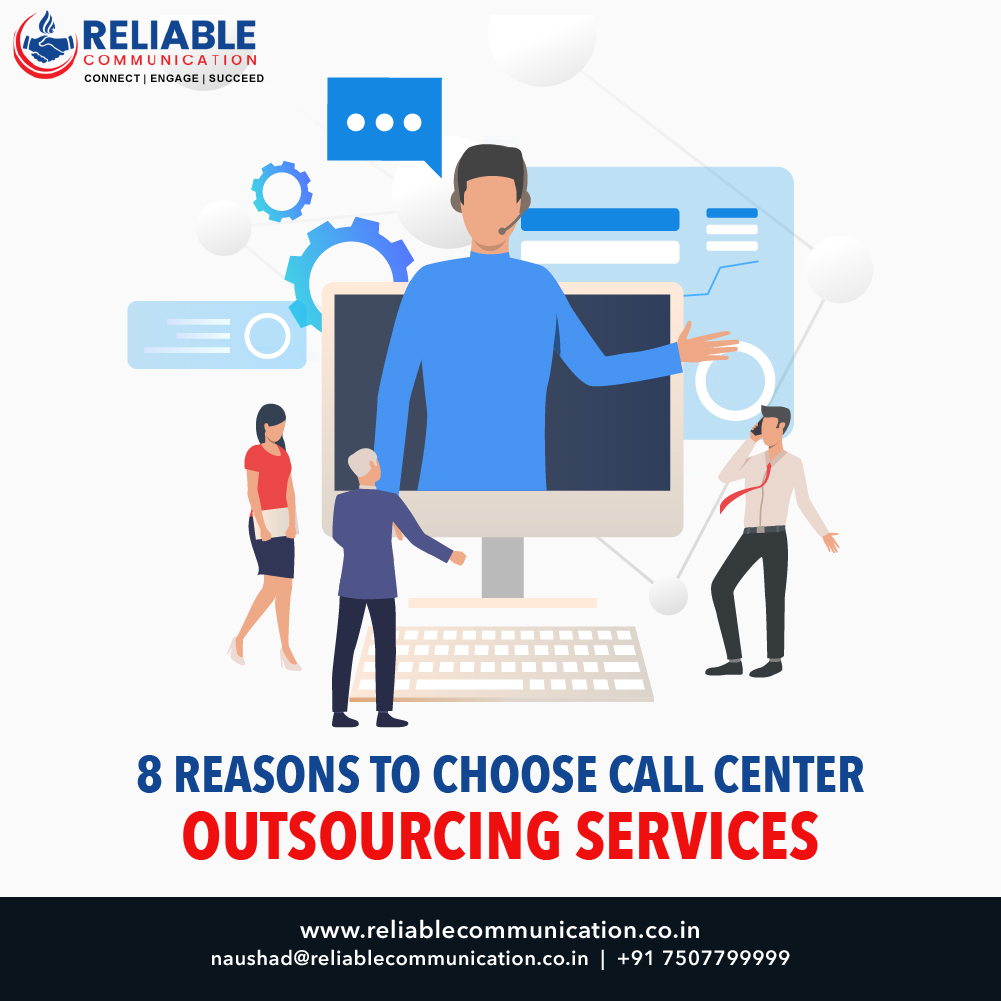

In today’s fast-paced business world, companies are constantly seeking new ways to improve efficiency, increase revenue, and reduce costs. One popular solution that has emerged in recent years is call center outsourcing. By entrusting your customer service operations to a third-party provider, you can benefit from a range of advantages that can help you streamline your operations and boost your bottom line. Here are eight reasons why you should consider outsourcing your call center


1. Cost Savings

One of the most significant advantages of call center outsourcing is cost savings. By outsourcing your customer service operations, you can save a significant amount of money on overhead costs, such as salaries, benefits, office space, equipment, and technology. Outsourcing providers typically offer flexible pricing models that allow you to pay for only the services you need, without incurring any extra expenses.


2. Scalability

Another benefit of outsourcing your call center is scalability. As your business grows, your customer service needs will also increase. By partnering with an outsourcing provider, you can easily scale your operations up or down, depending on your current needs. This means you can respond quickly to changes in demand without having to worry about hiring and training new staff.


3. Access to Expertise

Outsourcing your call center also gives you access to a team of experienced professionals who specialize in customer service. These professionals have the skills and knowledge to provide high-quality service to your customers, which can help you build a positive reputation and increase customer loyalty.


4. Improved Focus

By outsourcing your call center operations, you can free up your internal resources to focus on core business activities, such as product development, marketing, and sales. This can help you improve overall efficiency and productivity, which can ultimately lead to increased revenue and profitability.


5. 24/7 Availability

Outsourcing providers can offer 24/7 customer service support, which can help you provide round-the-clock service to your customers. This can be particularly beneficial if you have customers in different time zones or if you operate in industries that require constant availability, such as healthcare or transportation.


6. Multilingual Support

If you operate in a global market, call center outsourcing can help you provide multilingual support to your customers. This can help you overcome language barriers and provide a more personalized customer experience, which can lead to increased customer satisfaction and loyalty.


7. Advanced Technology

Outsourcing providers typically use advanced technology and tools to provide customer services, such as CRM systems, IVR, and chatbots. By outsourcing your call center, you can take advantage of these technologies without having to invest in them yourself. This can help you provide a more efficient and streamlined service to your customers.


8. Risk Management

Finally, outsourcing your call center operations can help you manage risk. Outsourcing providers typically have robust security protocols and disaster recovery plans in place, which can help you mitigate the risks associated with downtime, data breaches, and other disruptions. This can give you peace of mind and ensure that your business operations continue to run smoothly.


Conclusion

Call center outsourcing can offer a range of benefits for businesses of all sizes and industries. By partnering with an experienced outsourcing provider, you can save money, improve efficiency, and provide high-quality customer service to your customers.

In recent years, automated voice calls have become increasingly popular as a way for companies to provide customer service. These calls use sophisticated technology to mimic human interaction, allowing customers to complete a range of tasks and receive support without ever speaking to a live agent. In this blog post, we will explore how automated voice calls are revolutionizing customer service and the benefits they offer to businesses and customers alike.

1. Improved Efficiency and Cost Savings

One of the primary benefits of automated voice calls is their ability to improve efficiency and reduce costs. With automated calls, companies can handle a large volume of customer interactions simultaneously without having to hire additional staff. This reduces staffing costs and helps companies to respond to customer inquiries more quickly, improving customer satisfaction.

2. 24/7 Availability

Automated voice calls also provide customers with 24/7 availability. This means that customers can receive support and complete transactions at any time of the day or night, regardless of whether your business is open or closed. This level of availability is especially important for businesses that serve a global customer base, as it allows customers in different time zones to access support at their convenience.

3. Personalization

One of the most significant benefits of automated voice calls is their ability to provide personalized support to customers. By analyzing customer data and behavior, these calls can tailor their interactions to individual customers, providing relevant information and support that meets their unique needs. This level of personalization can help businesses to build stronger relationships with customers and improve their overall satisfaction.

4. Faster Response Times

Automated voice calls can also provide faster response times to customer inquiries. With the ability to handle a high volume of calls simultaneously, customers can receive support and complete transactions more quickly than they would with traditional customer service methods. This can help to reduce wait times and improve customer satisfaction, which is especially important in today’s fast-paced digital environment.

5. Multilingual Support

Automated voice calls also offer the ability to provide multilingual support to customers. By providing support in a customer’s native language, businesses can improve communication and build stronger relationships with customers from different cultural backgrounds. This can help to increase customer satisfaction and loyalty, as well as improve the overall customer experience.

6. Improved Data Collection and Analysis

Automated voice calls also provide businesses with a wealth of data that can be used to improve their customer service and marketing strategies. By analyzing customer behavior and interaction data, businesses can gain valuable insights into their customer’s needs and preferences, as well as identify areas for improvement in their customer service processes.

7. Increased Security and Fraud Prevention

Automated voice calls also provide increased security and fraud prevention capabilities. By using advanced security measures such as voice biometrics and multi-factor authentication, these calls can help to prevent fraudulent transactions and protect customer data. This can help businesses to build trust with their customers and improve their overall reputation.

Conclusion

Automated voice calls are revolutionizing customer service by providing businesses with a more efficient, cost-effective, and personalized way to interact with customers. With 24/7 availability, multilingual support, faster response times, and improved data collection and analysis, these calls offer a range of benefits to both businesses and customers. As technology continues to advance, we can expect to see even more innovative ways that automated voice calls will improve the customer experience in the years to come.

In today’s competitive business environment, companies must constantly look for ways to improve efficiency and increase profitability. One way to achieve these goals is by using an outbound dialer system. An outbound dialer is an automated system that makes outbound calls to customers, prospects, or leads. By automating the outbound calling process, an outbound dialer system can significantly increase the number of calls made, as well as improve the efficiency and effectiveness of those calls. In this article, we will explore the benefits of an outbound dialer system and how to maximize your return on investment (ROI) when using one.

Benefits of an Outbound Dialer System

1. Increased Call Volume:

An outbound dialer system can increase the number of calls made by up to 300%. This increased call volume leads to more opportunities for sales, appointments, and customer interactions.

2. Improved Efficiency:

Outbound dialer systems are designed to automate the calling process, eliminating manual tasks such as dialing phone numbers and leaving voicemails. This not only saves time but also reduces the risk of human error.

3. Enhanced Customer Experience:

Outbound dialer systems can personalize each call and provide customized scripts, allowing for a more personalized customer experience.

4. Increased Sales:

By automating the outbound calling process, an outbound dialer system can increase sales by making more calls, as well as by improving the efficiency and effectiveness of those calls.

5. Better Lead Management:

Outbound dialer systems can help manage leads by automatically prioritizing and organizing them based on specific criteria.

Maximizing Your ROI

1. Choose the Right Outbound Dialer System:

When choosing an outbound dialer system, it’s important to select one that meets the specific needs of your business. Look for a system that is user-friendly, customizable, and integrates with your existing systems.

2. Train Your Team:

To maximize the benefits of an outbound dialer system, it’s important to properly train your team on how to use the system. This will ensure that everyone is using the system to its fullest potential.

3. Utilize Customized Scripts:

Customized scripts can improve the efficiency and effectiveness of each call, leading to better results. Ensure that your outbound dialer system allows for customizable scripts and that your team is trained on how to use them.

In today’s competitive business world, it’s crucial to establish a strong connection with your customers in order to close more deals and grow your business. Here are some tips on how to achieve this

Listen to Your Customers:

The first step in connecting with your customers is to listen to them. Ask them about their needs, pain points, and preferences. This information will help you tailor your products and services to meet their needs and provide a more personalized experience.

Provide Exceptional Customer Service:

Providing excellent customer service is key to building trust and fostering a strong relationship with your customers. Respond to customer inquiries and complaints promptly, and go the extra mile to solve their problems and exceed their expectations.

Utilize Social Media:

Social media platforms like Facebook, Instagram, and Twitter are great ways to connect with your customers and build relationships. Share content that is relevant and valuable to your target audience, and engage with your followers by responding to comments and messages.

Personalize Your Marketing:

Personalizing your marketing efforts is another effective way to connect with your customers. Use customer data and insights to create tailored email campaigns and personalized recommendations based on their past purchases and preferences.

Offer Exclusive Deals and Promotions:

Offering exclusive deals and promotions to your customers is a great way to show them that you value their business and reward their loyalty. This can be as simple as offering a discount on their next purchase or a free gift with a purchase.

Host Customer Appreciation Events:

Hosting customer appreciation events, such as product demos, workshops, or open houses, is a great way to connect with your customers in person and build stronger relationships. This will also give you the opportunity to gather valuable feedback and insights from your customers.

By following these tips, you can establish a strong connection with your customers and close more deals. Building strong relationships with your customers will not only help you grow your business but also create loyal customers who will continue to do business with you for years to come.

When it comes to generating leads, there is no one-size-fits-all strategy. A lead generation strategy that works for one company may not work for another. This explains why the best companies understand that they must adapt their strategies to fit their unique needs. However, there are some basic principles that you can apply for a successful lead generation strategy.

Tips For A Successful Lead Generation

Target the right person at the right time
Use social media to build your sales pipeline
Develop content around the buyer’s journey
Keep monitoring your competition
Start networking
Track your website visitors
Have the right tools to track your leads
Use email marketing to nurture your potential audience

Target the right person at the right time

Before you begin any campaign, you need to know who your target audience is and what their needs are. You also need to identify their behavior patterns. So that you can send them information at the right time when they are most likely to respond positively to it, targeting those who have already expressed interest in what you do is much more effective than cold-calling random people from a list. You should target people who have shown interest in what your company does. Because they are more likely to convert into paying customers than someone who hasn’t expressed any interest yet. You need to target the right people at the right time to build a successful lead-generation strategy for your business.

Use social media to build your sales pipeline
Social media is the perfect platform for building your sales pipeline. Whether you’re a startup or a large company, social media can be an effective way to generate leads and increase sales.

The first step in using social media for lead generation is building your presence on the channels that matter most for your business. You can use these channels to promote your products and services, as well as content from other sources that may be relevant to your target audience.

Develop content around the buyer’s journey
The buyer’s journey is a popular framework used by marketers to understand how your audience makes decisions and what they need at each stage of their buying process. It typically includes five phases, starting with awareness and ending with purchase.

To make sure your lead generation strategy is effective, you should develop content that fits into each phase of this process and addresses the most pressing needs of your target audience at any given time in their life cycle.

For example, if someone is just starting their research phase—when they’re learning about different products or services—you’ll want to provide them with helpful resources like blog posts, videos, or webinars that give them all the information they need upfront.

So they don’t have to search for it on Google later on down the road when they’re ready for more specifics about what it takes for someone like them who wants value out of whatever product or service you offer!

Keep monitoring your competition
It’s a good idea to keep track of your competitors. Keep track of their strengths, weaknesses, and market position. Know who they are and what they sell. This will help you develop your strategy to beat the competition in your niche or industry.

Keep monitoring their marketing strategies, product offerings, pricing structure, customer support, and sales process as if it was part of your own business plan.

You’ll want to know if they’re trying a new approach with their current customers (for example, free shipping). If that strategy works effectively for them then consider testing out something similar for yourself!

Start networking
Your network is your best asset when it comes to generating leads for your business. Every person you meet has the potential to be a source of leads. Start by reaching out to people who might be interested in what you have to offer. Then ask them how they’d like to learn more about your products or services. So they can make an informed decision about whether or not they want to work with you.

Track your website visitors

Tracking your website visitors is one of the most important parts of a successful lead generation strategy. Without this information, you’ll be flying blind in your marketing efforts and won’t know what works and what doesn’t.

When you track your website visitors, you’re analyzing exactly who is coming to your site and what they are doing when they get there. This can provide valuable insights into how to improve your website.

Have the right tools to track your leads
As you build your lead generation strategy, it’s important to have the right tools to track your leads.

You should be able to know when someone first becomes aware of your brand, whether they’ve visited your website or not, and which channels are generating the most interest in your business. This will help you shape future marketing efforts and improve engagement with potential customers.

To keep track of these things, we recommend using Google Analytics or Hubspot CRM.

You can also use Zapier to integrate data from multiple sources like email marketing platforms and Google Analytics into one place. So that all information is easily accessible without having to dig through multiple websites or programs.

Use email marketing to nurture your potential audience
Email marketing is the best way to communicate with your audience. It’s a great way to build relationships and deliver content that will be valuable for your customers, which also makes it a great lead-generation tool.

You can use email marketing to sell products. But you should also consider using it as a way of building relationships and delivering value-based content. You could send weekly emails with useful information about how to use your product correctly or provide tips on how they can get more out of their experience with you.

Moreover, you could also promote events like webinars or seminars on topics relevant to your industry where attendees can learn more about what services you offer while providing some educational material that might pique their interest in purchasing from you later down the line (or maybe even right then).

We hope that these tips have given you some insight into how you can create an effective lead-generation strategy for your business.

As one of the fastest-growing recruiting solutions in the nation, recruitment process outsourcing (RPO) has garnered a lot of attention from companies looking to make the most of their hiring dollars. With a more customized approach to sourcing, recruiting, and onboarding qualified candidates, even senior-level positions can be filled quickly and efficiently.

What is Recruitment Process Outsourcing (RPO)?
Recruitment process outsourcing allows you to outsource your internal recruitment activities in part or in whole to an RPO specialist who owns and manages the recruiting process. The RPO firm provides the necessary skillsets, technologies, and process methodologies to you in an on-site, off-site, or virtual delivery model.

How Is An RPO Provider Different from a Staffing Company?
Recruitment process outsourcing optimizes your recruitment process, streamlines your operations, and focuses on long-term business strategy while reducing costs. Staffing agencies aim to fill positions quickly and focus on short-term, contingency solutions, at a higher cost. When you partner with an RPO firm, you can expect better candidate quality, more effective recruitment strategies, and greater flexibility. In addition, RPO uses a different pay structure. Rather than paying a contingency fee upon hiring, you will typically pay a management fee based on your specified needs and parameters and a significantly lower hire fee. In this way, RPO is more accountable to deliver the quality candidates you need and typically less expensive.

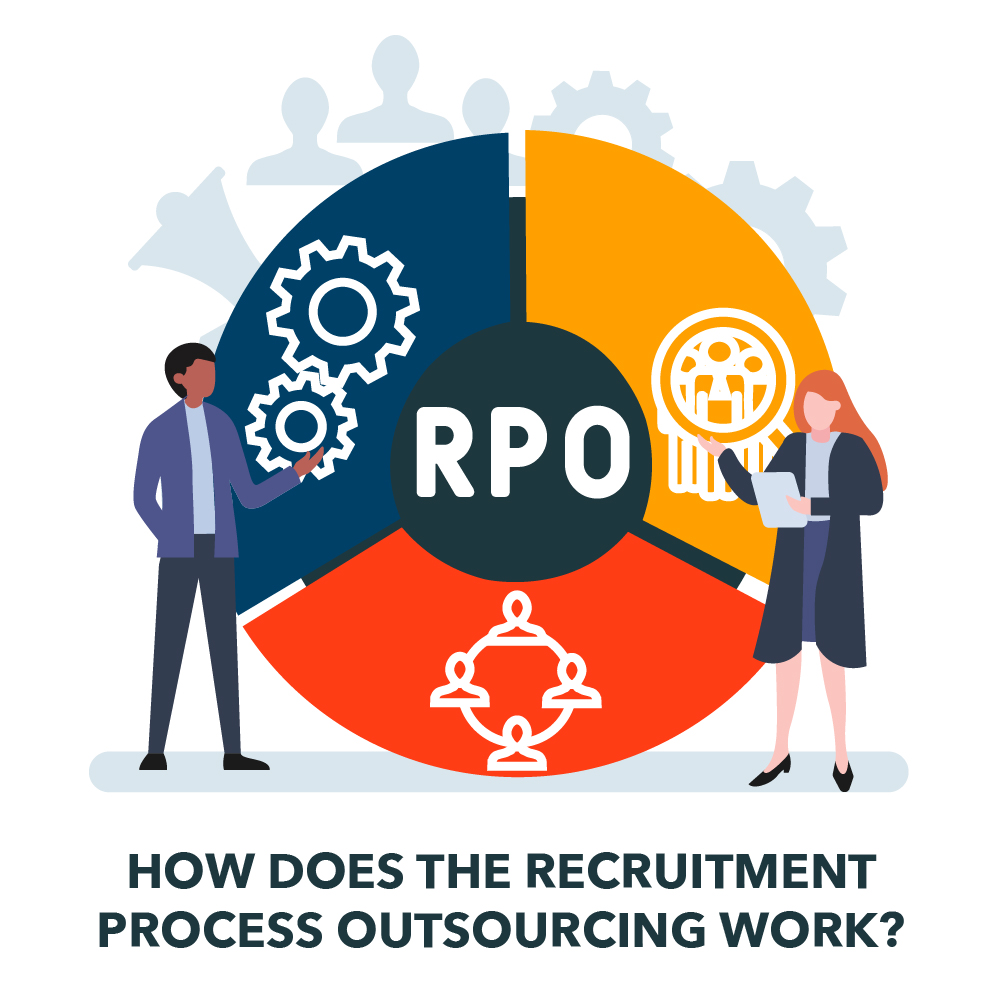
How Does RPO Work?
RPO is designed to integrate with your business, build on your company culture, and fine-tune your recruiting process in order to deliver high-quality candidates that will be a great fit for your company.

Workforce Planning—RPO firms utilize talent analytics to evaluate the current talent supply and demand as well as market compensation by department, role, and geography. RPO companies partner with your organization to develop a workforce plan and strategy to forecast future workforce trends, if necessary.

Sourcing—When 80% of new jobs are found through networking, deep sourcing expertise becomes an essential component of your recruitment strategy. RPO providers develop targeted sourcing strategies to address the needs of specific industries or functions, including recruitment marketing, talent pipelining, screening/assessment, predictive analytics, and talent advisory solutions such as employer branding, talent analytics, and recruitment messaging.

Screening—Rigorous screening, including skill assessments, behavioral and personality evaluations, and interviews, creates a pool of candidates that will be a good fit both for the position and for your company. Screening for cultural fit is also an important part of this process, ensuring that clients receive only candidates who will fit well within the current culture of the company.

Recruiting & Offer Management—RPO firms specialize in recruiting both passive and active candidates to find the best person for the job. The provider acts as your brand representative, promoting a consistent brand message, scheduling interviews, handling salary negotiations, and maintaining tight quality control

Reporting—The firm remains accountable to the client and provides regular analysis of recruiting metrics such as cost per hire, time to fill, retention rates, productivity, recruiting process conversion rates, and more.

RPO remains one of the fastest-growing recruiting service models in the United States. Companies looking to compete with major players in their industry need the far-reaching networks and industry expertise offered by a third-party specialist with the ability to fine-tune the recruiting process to fill needs for top talent.

What Benefit Does RPO Bring to the Table?
In a fiercely competitive recruiting environment where companies are desperate to hire skilled candidates for demanding positions, RPO bridges the gap between traditional recruiting methods and current hiring demands. No matter how large or small your hiring need, recruitment process outsourcing companies will:

Scale Solutions to Meet Your Needs—Whether you need 10 or 10,000 hires, RPO will help you find the best candidate for each open position.

Reduce Cost Per Hire—RPO lowers your hiring costs by reducing or removing the need to maintain a full-time, in-house recruiting division.

Reduce Time to Fill—With access to the best recruiting technology, industry expertise, and a broad referral network, RPO can significantly reduce the amount of time it takes to fill each open position.

Choose the Services You Want—RPO solutions can be customized to meet the needs of each client. Whether you want to supplement your current recruiting efforts or outsource recruitment entirely, an RPO provider can develop a targeted solution.

Recruitment process outsourcing (RPO) is a growing trend in the human resources industry.
RPO involves outsourcing the recruitment process to an external provider, rather than managing it in-house.
In this blog post, we will discuss the benefits of RPO and how it can help companies to improve their hiring processes.

1. Cost Savings
One of the main benefits of RPO is cost savings. Outsourcing the recruitment process can significantly reduce the costs associated with recruiting and hiring new employees. This can include savings on advertising, recruitment agency fees, and employee salaries.

2. Improved Efficiency

RPO can also improve the efficiency of the recruitment process. An external provider has the expertise and resources to handle the recruitment process quickly and effectively. This can help to reduce the time it takes to fill open positions, which can be especially beneficial for companies that are in a high growth phase or have a high turnover rate.

3.Increased Quality of Hires

Another benefit of RPO is that it can lead to an increased quality of hires. External providers have access to a wider pool of candidates, and can also provide specialized services such as background checks, assessments, and interviews. This can help to ensure that the best candidates are selected for open positions.

4. Flexibility

RPO also provides companies with flexibility in terms of the recruitment process. Companies can choose to outsource certain aspects of the recruitment process, such as advertising or screening, while still handling other aspects in-house. This allows companies to customize the recruitment process to their specific needs.

5. Scalability

RPO can also be scaled up or down depending on the company’s needs. This can be especially beneficial for companies that experience fluctuations in the number of open positions. Also, companies can expand their recruitment process to other countries to increase the pool of candidates.


6. Compliance

RPO providers are experts in the field and are well-versed in the latest laws, regulations and compliance requirements that pertain to recruitment. They can ensure that the recruitment process adheres to all necessary laws and regulations, reducing the risk of non-compliance for the company.

7. Access to the latest technology

RPO providers have access to the latest recruitment technologies, which can help to streamline the recruitment process and make it more efficient. This includes the use of artificial intelligence (AI) and machine learning algorithms to sift through resumes, chatbot technology to conduct initial candidate screenings, and video interviewing to conduct remote interviews.

8. Improved candidate experience

RPO providers focus on providing an excellent candidate experience, which can help to improve the company’s reputation and attract top talent. A good candidate experience includes timely communication, clear instructions, and transparent feedback.

9. Increased focus on core business

By outsourcing the recruitment process, companies can focus on their core business operations while still being able to attract and retain the best talent. This allows companies to allocate resources and time to their core business while leaving the recruitment process to the experts.

Conclusion

Recruitment process outsourcing can provide companies with a number of benefits, including cost savings, improved efficiency, increased quality of hires, flexibility, scalability, compliance, access to the latest technology, improved candidate experience, and increased focus on core business. By outsourcing the recruitment process to an external provider, companies can focus on their core business operations while still being able to attract and retain the best talent. However, it’s important for companies to do their due diligence and research the RPO provider, their reputation


Recruitment process outsourcing is the practice of an organization outsourcing all or a portion of its permanent hiring to an outside vendor (RPO).

By working on-site with the client to offer a complete hiring solution, an RPO provider can act as an extension of a company’s HR or resourcing function. To suit a client’s recruitment demands, an RPO provider can offer the necessary personnel, cutting-edge technology, and techniques.

RPO, or recruitment process outsourcing, companies offer talent acquisition solutions that handle compliance, scalability, cost, quality, and other recruiting challenges for professional and non-professional employment.

The development of a dynamic environment depends on RPO recruitment solutions. No of the size of the business, every customer wants to cut costs while retaining the best employees to support its expansion. For their teams’ support, a lot of businesses work with RPO recruitment agencies. To maintain efficient hiring and talent acquisition procedures, they also fully outsource HR recruiting operations.

Benefits of using RPO
Increased candidate quality

An RPO will be in charge of and oversee the entire hiring process for their client company. Understanding an organization’s needs, generating job advertisements, conducting interviews, and ultimately selecting a good candidate are all part of this process. An organization does not have to deal with the inconvenient nature of the employment procedure. RPOs have also begun to assess potential candidates using cutting-edge technology

Saves recruiting costs

This is one of the primary reasons why companies opt for an RPO service, as well as one of the most significant RPO benefits. Many businesses squander money on headhunters and job boards, or they waste money on high turnover rates. Time is just squandered at other organizations due to extensive hiring processes or antiquated (or non-existent) technologies. By streamlining your recruitment process and showing you how to identify good candidates faster and for less money, an RPO provider may help you save money on recruiting.

Helps employment brand
RPO businesses are experts at creating complete employer branding campaigns as part of their offerings. While attracting passive applicants and retaining employees, improving the candidate experience, and raising hiring manager satisfaction. Staffing firms run the danger of diluting the employer brand due to inconsistencies in messaging. RPOs, on the other hand, help clients enhance the perception of their employer brand by measuring the client’s and top rivals’ brands. Recruitment process outsourcing benefits the company in a variety of ways beyond just decreasing recruiting costs and filling vacancies faster. An RPO can really help a firm become a more enjoyable place to work.

Additional RPO benefits

  • Flexibility in recruitment.
  • Scalability during high and low-volume periods
  • Access to the most efficient & latest technology
  • Enhance candidate experience
  • A Wide-scale reach
  • Reduced recruiting cost
  • A consistent and predictable recruit-to-hire process
  • Increased hiring manager satisfaction.

Conclusion
RPO helps you add significant value to your company by assisting it in aligning its talent acquisition strategies with its long-term business goals. It helps you provide human capital solutions, technology & methodology and ensure an efficient, error-free recruitment process.

According to research, 77% of customers have had positive experiences with businesses over the past year.

It’s a no-brainer that your business will fail if you don’t keep your customers satisfied. It’s also true that growing businesses prioritize customer engagement and satisfaction more.

In fact, companies with decreasing or constant revenue don’t prioritize customer satisfaction as much. As such, you must be mindful that happy customers can become your best salespeople. It is by their recommendations and referrals that you can grow your customer base.

A leading indicator of customer churn is bad customer experience. They can even negatively affect the growth of your company. You must gauge customer satisfaction to eliminate customer churn and enable your business to grow smoothly.

In this article, you will come to know all about customer satisfaction. You will understand why it’s important, how you can measure it and how CRM enhances customer experience.

The Importance of Customer Satisfaction for a Business
Understanding customer satisfaction gives you an insight into what a customer thinks about your company.

Of course, no business wants its customer base to shrink. However, building a customer base can be quite a difficult task. Thus, you must make customer satisfaction a priority.

Here are some reasons why customer satisfaction is so important:

1) Products
Even if you think that your products are perfect, customers might not agree. For example, your customers might point out a safety flaw in the products, which you didn’t consider. They might also be using your product in a way that you hadn’t expected.

Regardless of the scenario, you will need input from your customers. This helps you understand if there are any changes to be made. You might also decide to do away with a product after suggestions from your customers.

2) Services
Regardless of the way you intend your customer service to be, your customers might interpret it otherwise. For example, you may have a service for consulting, but most of your customers may not want it.

They might want more or fewer services from you. That is why you must take customer satisfaction into account.

3) Operations
Consider the business hours of your company. Do you believe you might boost sales if you stay open for another hour? If you’re facing such a dilemma, the best course of action would be to ask your customers.

You can have your customers fill out a survey to determine an adjustment of business hours, internal processes, etc. Thus, this way you can make decisions about other relevant aspects of your business.

4) Marketing
It is of utmost importance to understand your customers when you are trying to market your products. One excellent way to understand what your audience wants is by surveying their interests.

Once you understand their preferences, you’ll be able to offer them solutions through your products.

Also, read 6 call center problems and How to overcome them.

How do you measure Customer Satisfaction?
It’s very important to measure customer satisfaction as a business. However, you must be wondering how to measure such an abstract idea. In reality, you actually measure customer satisfaction through scores.

Customer satisfaction scores are especially necessary to track, as customers are your main source of revenue. As mentioned before, your company will suffer if your customers are not happy.

Now, how can you as a business owner collect data on customer satisfaction? You can measure customer satisfaction by making customer surveys.

With technology, you can easily make use of digital analytics. These show you how customers are navigating your website, what features they’re interacting with, the challenges they’re facing, etc. However, you need to be more thorough.

Here are the three crucial metrics that you can use to measure Customer Satisfaction:

1) Customer Satisfaction or CSAT scores
This is the most important metric to find out about customer satisfaction and your customer experiences. The CSAT score gauges whether the services and products that you offer to meet your customer’s expectations.

A CSAT survey basically asks customers to rate their experience after they use a product or service. The rating scale ranges from 1 to 5 in most cases. Most surveys also show customers the reason behind their ratings.

2) Net Promoter Score (NPS)
NPS is a very commonly used metric to measure customer satisfaction. It’s also the most popular of the three metrics to measure customer experience. Generally, this metric asks only one question from a customer.

First, NPS will ask your customer how likely they are to recommend your brand to others. Next, it will ask an open-ended question to gauge all the reasons that led to a customer’s satisfaction or dissatisfaction. NPS scores lie between 1 to 100.

3) Customer Effort Score (CES)
Yet another metric used to measure the customer satisfaction level of your brand is your CES. This score measures the amount of work that customers need to put in to solve their challenges. Basically, it helps understand whether customers are getting adequate support from the company.

The best way to do this survey would be to use multiple channels. That would enable you to cover the maximum of your customer base. Moreover, it will also ensure you receive the maximum number of responses.